Showing posts with label Year 5. Show all posts

Wednesday, 31 July 2013

Graduation


Hi,


Firstly, thank you very much for all of the lovely messages on my previous posts - it is nice to feel appreciated. I will keep writing while being a junior doctor, but may take a different format. This weekly format was quite clunky, as some weeks I had loads to say, and some weeks I didn't have very much - perhaps I will change to a 'regular blog' instead, meaning I can update on days when exciting things happen, with shorter posts which are easier to fit into (what is going to be) my busy working life!

I have now graduated, and am due to start work next week. A very scary thought indeed! Graduation was lovely, we had the normal ceremony in the morning, where we came up on stage one by one to be presented with a certificate as part of the main university ceremony, and then in the afternoon we had our own medical students ceremony where we said the (revised) Hippocratic oath (old one not really fit for modern medicine/surgery) and we had our own prizes, speakers and so on. The main event in the morning was a lot more interesting than the one at the university I intercalated at two years ago; it was a lot more relaxed, a lot more fun and a lot less pompous. The event in the afternoon was very informal as well, and much more personalised as it was just for my year. All in all a really enjoyable day, and having this certificate in my hand, and being Dr Internal Optimist is just crazy. When people ask me what I do, I still say that I have just graduated and try and steer the conversation away from that topic. I feel a bit uncomfortable about it, almost as though it isn't right - something that I hope will pass.


Current impression I am likely to make as I start my vascular rotation next week

And it is important that that feeling passes - 'Black Wednesday' is next Wednesday - I start work in less than a week, and have shadowing before that. I am going to have to introduce myself to all of 'my' patients! I have decided on a compromise, which makes it seem less strange. I am going to indroduce myself as "Internal Optimist, one of the doctors looking after your care" rather than "Dr Internal Optimist" as it seems less... strange to me. I don't know why it is - I suppose I have always held those who teach us in quite high regard (yeah, I am a bit of a goody-two-shoes ... or sometimes at least). Having looked up to some very inspirational doctors during my 6 years at medical school, it is very strange having crossed that student-brain-barrier and having entered a position where I could well be the 'inspirational' doctor that medical students see. Sadly it is much more likely that I am the poorly-organised-and-rushing-around-doctor who medical students will not get much help from, but I will try my best.

Anyway, I am looking forward to everything ahead, and while it feels very strange, I think that is a good thing. I will keep posting and keep you all updated. Thank you for being so lovely to me throughout my time posting as a student - writing a blog is good I think. It encourages reflection (and god knows we are told to do enough of that at medical school) and is cathartic to talk about what happened, and look back on how things made me feel. I just wish I had the time (and knowledge) to organise all my old posts in some way to make them more easily findable, and separate them from the 'Dr posts' that will come.

If anyone has any good ideas for a blog title change, please let me know!

Tuesday, 9 July 2013

Final week as a medical student


Hi,


I would like to apologise for this post being really late, I wrote it over a week ago, then pressed save rather than publish, and went on holiday. The holiday was lovely, but I realise that I need to actually press the right button!

Despite having found out I had passed my finals almost 2 months ago, I have been working as a medical student in the hospital, getting ready for the job of 'doctor' come August. The idea still makes me feel excited and/or scared. However, the gruelling life of a medical student has come to an end for me. This was the last week I am going to spend in hospital as a medical student, and was topped off with my graduation ball. This week I introduced myself as a medical student for the very last time, I did my last referral as a medical student (where, ironically, I got a grumpy doctor who refused to talk to medical students as it was 'inappropriate') and signed myself off as "Internal Optimist, Medical Student" at the bottom of the notes for the last ever time. It is so exciting to think that, after a months holiday, I will be writing "Dr Internal Optimist, GMC *******" at the bottom of the notes instead. 6 years of hard work, not including all of the school work and preparation before university, have gone into this end point. 

But I am not really sure how to feel.

The ending has been a bit spread out; I was really happy to finish my finals, and overjoyed to have passed them, but then I have been working as a medical student for the last 1-2 months. I haven't really had any real 'you are finished forever' moment, which is arguably a good thing. I am so glad after each 'hurdle' that I manage to make it over, I am not sure I would be able to handle all of it at once. Although I will never be introducing myself as a medical student again, I still have one 'hurdle' left - graduation. After graduation, when I have that certificate in my hand, I will feel as though it is well and truly over. It will probably be quite an emotional day, not just for me, but for most of my year.


So I am slightly confused about how to feel at the moment. I am very relieved that I have made it despite friends who were just as able as me dropping out of the course throughout the last 6 years. I am really happy to have made my main 'life goal' over the last 7 years or so. Most of the last 7 years have been aimed at getting into and passing this course, then getting a good set of rotations afterwards, all of which I have managed to achieve. 

But I still feel a bit uneasy. Perhaps it is a sense of 'what now' - having such a long term goal fulfilled leaves me wondering what I should be aiming at now. Perhaps it is the fear of working as a doctor next year; a job where patients put a huge amount of trust in you, and where a simple mistake can have disastrous consequences.

Don't get me wrong though, I really am happy to finish this course and graduate, it is just there is a slight grey lining to my radiant silver cloud. After graduation, I think the only way that I am going to feel more relaxed about this is by starting work in August, and proving to myself that I can do this job. After all, I have spent 6 years preparing for it, I should be ready by now!

Tuesday, 18 June 2013

Ambulances


Hi,


An interesting week in A&E, the most exciting part being a few days with the ambulance service with the paramedics. 

A&E had some interesting cases, some sad cases and some relatively dull cases. The interesting included someone whose pacemaker was giving the wrong signals, a road traffic accident where a cyclist had been hit by a car, who had then run off (leading to us trying to balance the clinical needs of the patient with the police wanting to question them ASAP to catch the car driver), and someone who had dislocated their shoulder (which I got to put back in, something I hadn't done before). Several of the sad cases involved people coming into A&E and dying of problems like cardiac arrests, and one was a patient who liked to 'fake' seizures to get her into hospital. There are always lots of less interesting cases, and people who come into A&E who should have gone to their GP instead, but I am still really enjoying this placement.

The most exciting part of the week, as I said before, was a few days on am ambulance with a paramedic and a technician. Driving around on blue lights and everyone getting out of your way is very exciting! The saddest case that we saw was a man who had started feeling really breathless and confused while in a supermarket, and the cashier had called 999. He has a strange heart rhythm, which we initially thought was SVT, but was actually fast AF. He was very worried about his car parking ticket running out as we took him on blue lights to the hospital, and I spent the time reassuring him. We arrived, and 10 minutes later he arrested and, despite 40 minutes of resuscitation being attempted, he died. Despite him appearing relatively well in the ambulance, where his main worry was his car, he just died - and we still have no idea why. He didn't seem to have any signs of a heart attack, so we were wondering if it could be a PE. I found it quite upsetting, and I don't think that feeling a bit travel sick from bouncing around in the back of the ambulance at high speed with no windows helped things. We saw a number of other patients including a man who had been found in a very 'compromising' position, who tried to tell us that he had been attacked in his home, though it looked as though the problem had been caused by some kind of strange sex game. 


SVT: regular, fast 


AF can be fast and look similar to SVT, but will be irregular rather than regular in rhythm


While on call with the ambulance guys, I also went into a school full of primary school children and spent some time showing them around the ambulance with the paramedic, letting them turn on the lights and sirens etc. We were still 'on call' whilst doing that, but didn't have any interruptions. I think the point of it was to try and make sure kids are not scared of ambulances if they need to come into hospital, and think they look 'cool' instead! After some of the sadder patients before the school, I didn't really feel in the mood to be very cheerful and upbeat (which you need when talking to children), but it was a nice distraction. 

Seeing a few days in the life of a paramedic was interesting though, as despite there being some interesting things, there is also a lot of calls that they attend that they certainly shouldn't need to; a lot of people misusing the 999 number.

Quite an emotional week, but busy and interesting. My last week next week, then graduation, a little holiday and I start working as a doctor!


Tuesday, 11 June 2013

Spot diagnosis


Hi,


A week in the emergency department for me, where I get to assess and treat lots of patients, see a large overdose, and make a 'spot diagnosis' on a receptionist who is quizzing me on her disease.

One of the best bits about A&E is patients are meant to be in and out in under 4 hours, meaning that you can see, examine, investigate and treat a lot of patients in each day. I am getting better at writing management plans that are actually accurate now; something I found difficult. I find diagnosing patients and writing management plans very rewarding (if you get it right). For example, last week a 40 year old lady came into the A&E department who
 thought she had a pneumothorax. This is a problem where air gets outside of the actual lungs, but is trapped inside the thorax which surrounds them. This can deflate the lungs and make you breathless. I have put a picture of a chest X-ray below:

This is a chest X ray showing a fully inflated left lung (right of the picture) and a partially deflated right lung. You can see the loss of the normal lung markings, showing that it is just air and not lung across most of the right side. This is a large pneumothorax.

The 40 year old lady was scared that this had recurred, as she had chest pain and felt breathless. As the first person to see her, I started off with observations to make sure she was stable, took a history and did an examination. A pneumothorax will have reduced air sounds over it if listened to with a stethoscope, as there is no lung there. From the history and examination (which showed she was tender over a few ribs too) I guessed that this was 'musculoskeletal pain' - i.e. she had pulled some muscle in her chest, rather than a pneumothorax. To make sure, I ordered a chest X-ray, which I then had to interpret. I thought she was fine, so went to talk to one of the doctors in the emergency department. He listened to the history, had a look at the chest X-ray and just agreed with me, and told me that I should discharge her. Very rewarding to have your opinions 'validated' by someone- hopefully something I can get right more and more often as time goes on!

Other patients who I saw this week included someone who had taken nearly 200 tablets of a mixed variety, mostly diazepam, and had come in after being found unconscious on a park bench (he was quite sick, and my job involved the exciting task of looking through all the empty pill packets, working out what he had taken, how much, and finding out how dangerous each one was on toxbase). Another patient was a 98 year old gentleman who had severe dementia, and had been bought in by the nursing home as he had become 'increasingly confused'. This is called delerium, and there are hundreds of causes for it. As the patient couldn't say anything to me, it was very difficult to work out what it was that was causing it, and I had to order loads of investigations. I don't feel I really got to the bottom of it, as everything I did was negative, but my senior decided that it was probably a pneumonia and discharged on amoxicillin. Not too sure how happy I was with that, as I couldn't see any signs on the chest X-ray, and there was no suggestion of infection from the blood markers, but I couldn't really argue...

Early in one of the mornings, when things tend to be a bit quieter, I was chatting with a receptionist, who asked me if I could diagnose her condition. I asked her for some clues, so she told me to treat her as if she had been bought into A&E unconscious on a stretcher with a low blood pressure, but no other obvious problems. She had a good tan going, so I ventured that "perhaps, because you have this bronze looking skin, you have Addison's disease?". I was right, and she was really impressed. It is mainly because 'hyperpigmented skin' is a typical multiple choice question option for Addison's - and I have just done finals. I felt very smart for the rest of the day, after she had heaped congratulations on me, but also a little smarmy. It is good to get things right, especially for the patients, but if you show off about them you just look like a nob! Fortunately this blog is anonymous, so I can get away with showing off a little bit ;)

Friday, 7 June 2013

Referrals


Hi,


First, very sorry for the really late post. Things are getting out hand. I always tried to post on Sundays, but then with busy weekends this started shifting to Monday/Tuesday and now it seems to have shifted all the way to Friday. Hopefully I can catch up. The problem is, things re really busy and, while I enjoy sitting down to write a post, it takes time which I don't really have! Perhaps, come August, I will try and keep it regular but remove the 'weekly' from the title to take away that expectation (which I am struggling to meet!) What do you think?

Anyway, moving on to what I have been up to this week (by which I mean last week), it was a bit more empty than the week before. A bank holiday when I didn't need to go in, and a day of lectures meant I only spent a few days in the hospital. I am still on an acute medicine rotation for this week, before moving onto emergency medicine for the next few weeks. 


The day in the acute medical unit consists of a consultant lead ward round at 8AM, seeing most patients. Patients are normally only admitted to this ward for a day or two, so each patient is an interesting case, needing diagnosis and management plans, which keeps things interesting. There are two consultants who split up and see the patients who have been admitted in the last 24 hours, and a registrar (slightly less experienced) who sees the patients who have been in for over 24 hours, and adjusts their management plans. There are about 30 beds in total. After all patients have been seen by one of these three groups (each consultant has junior doctors with them to help things along) everyone goes into a meeting room, and all patients and plans are discussed. All the plans are put onto a big spreadsheet, which is printed off and pasted on the wall. The rest of the day consists of the consultants going somewhere (still not sure where, perhaps there is a secret bar out back?) while the juniors carry out the 'jobs' on the list. These could be things like taking blood, asking specialists for referrals, or inserting a chest drain. This is the most useful part for me, as I can just grab jobs off of this list and do them, meaning I am helping the team out, while learning myself.

One of the most useful things I was trying to practice this week was referrals to other specialities. This is where a patient needs a more specialist opinion for a complex disease, and you try and persuade a specialist to come and see them. As a regular reader might know, I have had bad experiences in referring to specialists before (like this), so I thought it would be a good idea to get used to how to do it. Different specialists want different information; a cardiologist will want to know about previous heart attacks or angina, and cardiac risk factors (like smoking, family history of heart disease, high cholesterol etc) while an endocrinologist might quiz you on the exact insulin regime the patient has, how closely they stick to it, and their blood glucose highs and lows. Being prepared for what they ask you is very important, as they won't hang around if you need to pop off and ask the patient! This week I referred patients to the dermatologists (one for a very interesting rash that looked vasculitic (is it lupus!?)) and I took a patient over to vascular surgery myself to try and squeeze him into the radiographer's  list of vascular imaging, where they use an ultrasound machine to view the vessels in the legs, and try and work out what the blood flow is like. This sort of negotiation should be really useful come next year when I need to get patients treated and out of hospital as quickly as possible. By taking this patient to the radiographer myself (rather than leaving him to a hospital porter, who may take ages to get there) and negotiating slotting him in between two patients I got him the imaging a day earlier, meaning he could be seen by the vascular surgeons a day earlier, and out of hospital a day earlier (just a bed for a day is about £400 according to the department of health). 

A typical looking vasculitic rash

 As well as trying to do my part to save the NHS money, I also got to participate in draining fluid out of several abdomens due to liver disease. This involved sticking a needle and syringe into the belly to suck out fluid to analyse, and while exciting for me, may not be the sort of thing that people really want to read about!

Wednesday, 29 May 2013

Night shift and possible perforation


Hi,


A week in the acute medical unit this week, in the hospital that I will be working at next year. This week, and the next 6 or so, are part of the last section of my course as a medical student, aimed at teaching me to carry out the job of a junior doctor next year. Fortunately I have been placed on the acute medical unit, where patients tend to be quite sick, decisions are made daily as there is a high patient turn over (people only usually stay for a day or two) and lots of bloods, cannulas and so on need to be done. This is perfect for me, as I want as much experience as possible in doing these sort of things, as well as ordering scans, making general requests and general dogs-body work around the hospital. I certainly don't have any glamorous expectations of what next year will involve!

My 'non-glamorous' expectations were proved right on Friday when I did my first proper night shift. Previously I had only stayed in the hospital til about 10/11PM, but this week I came in at 9PM and stayed until morning. This night shift was actually a lot of fun, and I got to clerk in several patients who had come into the hospital at night, and carry out lots of procedures including the ever glamorous 'PR' exam

Glamorous medicine... Who said being a doctor isn't an attractive profession? Between these and being vomited on there is so much to choose from...


On the night shift I was admitting patients, taking their history, examining them and then planning initial management and investigations. The registrar was a really nice cardiologist, who talked at length about how upset he was about the events in Woolwich (him being a Muslim  and how it was creating so many more problems... Anyway, this blog isn't meant to be a political statement. The problem with this registrar was that he had decided that, as I had passed finals, I was just an 'unemployed doctor' rather than the medical student I still introduce myself as (until August). This meant that, after clerking a patient who had presented with upper tummy pain, and bloody vomit (haematemesis) - I had taken bloods, ordered an erect chest X-ray (to check for perforation) and all those sort of things, he was asking me to look the results and write down what they said, and plan management. This was pretty scary. He was quite stable, so if he hadn't had a perforation into his abdomen from his stomach he could be left  until morning, whereas if he had, he needed much more urgent assessment. In order to be able to tell this, an erect chest x-ray is done, as it will show air under the left diaphragm, showing air has escaped the stomach and is now outside within the abdomen (where it shouldn't normally be). 

See the arrow on the left of the picture (right side of the patient). This points to air which is under the diaphragm, therefore not in the lungs but in the abdomen, which suggests a problem such as perforation. There is air on the other side (the left of the patient) but this is probably just in the stomach and does not suggest a perforation.

Anyway, this is quite an easy diagnosis to make (as they go) as it is either there or not. But it was a very scary idea putting my pen to paper and saying it was there or not, and having his management depend on what I thought. If I was wrong, he could go all night without the proper treatment and be very sick, dangerously ill, by the morning. The 'lovely' registrar was refusing to help me decide what it was until I had sorted out my own plan, as 'I had to work out how to do it at some point'. Good to have practice in this sort of thing, but not now! Anyway, I thought he was fine, had an 'upper GI bleed' and hadn't perforated, and he agreed, so it all worked out in the end.

The rest of the night shift was pretty hectic, clerking in a man with blood clots in his lungs (pulmonary embolism), someone who was a chronic alcohol abuser who couldn't even tell me why he was in hospital, and a patient who was very depressed and was trying to persuade me to kill him. I have a lot of time as a medical student when things are busy, which was really useful for the latter patient. This is all ignoring everything else that happened this week. Needless to say, things are busy, and I am really loving it!

Wednesday, 22 May 2013

Drugs smuggler


Hi,


Back working on the wards, sadly. We are meant to be preparing for next year when we work as doctors by getting used to the F1 job, but it also seems like a cheeky way to get people to work in areas of the hospital for free! Either way, I have had a pretty good week, so I don't have anything to complain about. I had some lectures and courses at the start of the week, getting my ILS certificate, then spent some time in the emergency department (where I think I may want to work later in life) and in anaesthetics.

The time in the emergency department was fun, and I spent most of it clerking in patients, which  involves taking a structured history and examination, and planning what initially needs to be done for them. I have forgotten a remarkable amount already since my exams, it is very embarrassing! The most interesting cases I saw were someone who had come in with a police escort after eating a lot of heroin to try and smuggle it into the country (but it had ended up in his bloodstream instead) and a Lady (as in Lords and Ladies) who used to be famous for her organised charity work, but had succumbed to advanced Alzheimer's disease (very sad). I hate diseases like dementia. As well as making you ill, the take away who you are/were, making it really difficult for the family as well. Who knows what will happen in my (and your) lifetime to change how these diseases effect us, perhaps removing them all together. Well, we can hope!

Other than working in A&E, I also spent some time in anaesthetics this week, and observed the anaesthetics for several different types of surgery. I saw breast surgery including removal of tumours, and someone having a breast reduction on one side to balance their breasts which were asymmetrical. This was all pretty 'normal' and I got to practice putting in certain airways and inserting cannulas. The most interesting case here was a patient who had received a blue dye during surgery to locate the lymph nodes draining from a breast cancer so these could be removed as well. This dye had spread throughout her body and she looked very blue and cyanosed, looking very ill despite being well. A good thing to remember in case it leads to panic on the wards when you think someone is becoming very ill, whereas their 'smurf-y' appearance (technical words...) should only last about 24 hours before fading away.

The other procedures I saw in anaesthetics were based around operations on the throat and airway (trachea). These are complex, as the airway needs to be used to breath for the patient, while it is being operated on. Some of the operations involved using a high pressure of gas, like a tyre pump, to inflate the lungs by blowing it down at high pressure from above the level of the operation. Exciting! One of the others was very interesting as it involved an operation to fix the vocal chords in a certain position and the patient had to be asleep for the operation (from outside the neck inwards) but woken up at intervals to check his voice. Very complicated for the anaesthetist, who had to control the level of conciousness with drugs into the blood stream (as couldn't use the airway to get any drugs in), and didn't want the patient to wake up at the wrong time. Something called a BIS monitor is used in this case to tell how 'awake' or asleep the patient is. This gives a score of 1-100 based on how 'awake' you are, and is shown on the image below. I tried it out and it told me I was unconscious. It had been a long day, but I think it was because it wasn't attached properly. Either that or all those finals exams have broken my brain! 


A BIS monitor showing 97 (awake and alert)

Wednesday, 15 May 2013

PASSED!


I passed!


Woooo!

Fantastic news! Since the news I have been so happy; it comes in waves, where I seem to forget for a bit, then the thought comes back that I will be a doctor from this August and I am really happy again. I am still finding it difficult to believe, that I am finally going to become a doctor, but it is all very exciting. Over the weeks before results I have wanted nothing more than to pass, and to have that worry lifted is so relieving. I would hate to be resitting the exams I just did again, or having to do that year again!

Anyway, now I have to go back into the hospital for a bit, then have a summer holiday, then get to work, as Dr Internal Optimist. Amazing!

So amazing, I am really looking forward to working in August (combined with a high degree of trepidation/fear!) If you can have a job that you look forward to going to, then I am not sure you can ask for much more. I hope that I still feel this way after working as an F1 for a few weeks!

Either way, there is not much more to say. I passed my exams, I get to be a doctor, I got my first choice of hospitals for first and second year, and I am more than happy. It certainly pays to be an optimist!

I will keep my blog title as 'medical student' for the moment, as I am still going to be working in the hospital for a bit, and can keep you updated about that, and then can update it come my graduation ceremony (when I post as an actual paid doctor)


Thanks so much to all of you for your words of encouragement and luck - they clearly worked out!

I passed guys!

So happy :)

Wednesday, 1 May 2013

Waiting game


Hi,


So my exams are finished, I got into the F1 and F2 placements I wanted in my top choices of hospital and I am sitting around waiting for my exam results. I think the exams went OK, there were some hard questions and some easy questions, but the most important question is whether there were enough easy questions / I did well enough in the hard questions / I messed up too many of the easy questions. I just want to know if I have managed to pass and can be Dr Internal Optimist!

There is nothing I want more at the moment than to be able to change the title of this blog to '

A WEEKLY BLOG FROM A UK JUNIOR DOCTOR


but before that happens I have to have passed my exams! Lots of nervous energy at the moment as I try and waste away the days before results day. It seems so unreal that I am (hopefully) almost at the end of the journey. I have wanted to be a doctor since I was in 6th form - around 16 years old - so this is about 8 years worth of ambition  and work. All of my A levels, exams and so on just lead up to this point, so very nervous indeed!

Either way, I will continue trying to use up the huge 'hole' left in my life where revision used to be by enjoying myself (so many hours in the day!) and I will keep you posted.

Wish me luck!

Friday, 12 April 2013

Ooooh, I'm half way there


But I am still, living on a prayer!


Sorry for the cheesy start... I am half way through my final examinations and the 'revision madness', combined with the relatively small revision play list has got to my head. I though I would 'give it a shot' at putting song lyrics as an introduction. Don't worry; it won't happen again ;)

Anyway, trying to work hard at the moment to finish off the final exams, but I am finding it tough to keep focussed (but not as tough as 'working the diner all day'...) It seems as though I have been working hard for far too long, and the poor brain is getting fatigued! Just need to keep focussed, will all be over by next Wednesday... 'one way or another'...

Exams so far have gone OK. There have been some hard questions and some difficult moments in clinical examinations, but there have also been stations/questions which I have done really well in. I just hope that the goods outweigh the bads! I have one more knowledge (written) test and one more clinical examination (where you are assessed on taking histories/performing examinations) left, so I am actually over half way there, but then that isn't nearly as catchy as a song...


Most of this month has involved me holing myself up in my room (or my ivory tower if you prefer), avoiding having any fun with my flat mates and working at cramming as many facts into my brain as possible, so I can regurgitate them on demand. Not living with other medical students this year is both a blessing and a curse. It makes it a lot harder to practice clinical examinations and histories, as they don't really want to/know how to pretend to have certain conditions for me to practice on. On the positive side, it leads to a much more relaxed atmosphere as around exam time, if the whole house is medical students worrying about the same exams, it feels much more stressful, and people mentioning some condition you cannot remember off the cuff while cooking dinner (those delta waves in Wolff–Parkinson–White syndrome) leads to more stress when you feel as though you don't know as much as your compatriots. This year I have been pretty removed from all that stress, but conversely I don't know if I am learning enough/too much! My thought process has always been that you don't (usually) regret working too much for an exam, but you are far more likely to wish you had worked harder, so I may as well work hard and hope for the best!

As for exams, things are going OK. I have had a few mistakes, most embarrassingly being very sure about a diagnosis of squamous cell carcinoma (SCC) in one of my clinical exams, after taking a history from, and examining, a patient with a prosthetic lesion. It had been created by some kind of skin putty moulage technique, and looked (very similar to) the picture below, but with a darker centre. I described it as below, with the central ulceration, and assured the examiner the most likely diagnosis was SCC

A 'classic' SCC lesion - and I swear the moulage looked just like this!

At the end I formulated my management plan, referral to dermatologist, etc and then for the further questions I was told that the dermatologist thought it was a melanoma, and I had to talk about the management of that condition instead. Below is a picture of a melanoma:


Melanoma from good ol' Wikipedia 

They don't really look very similar at all. I am not too sure what they were hoping for with the moulage, but I hope I wasn't penalised. I think that the paint that I identified as the 'central ulcer' was in fact the melanoma, and the raised edge around it must have been some kind of irregular border. Other people seemed to get it right, though, so perhaps it is just me! Perhaps the lesson here is not to be too certain about anything :P

Hopefully small mistakes like this will not lead to me failing the station, as you can only fail a few stations before failing the exam! I did pretty well across the rest of the examination, so hopefully  I will still pass. I finish my exams next Wednesday, AND find out my job allocation for next year on the same day. Hopefully it is going to be a really good day!

Just need to focus on doing well in the next two exams, so I can pass my exams, and be a (hopefully) brilliant doctor next year!

Thursday, 7 March 2013

Final week of rotation as a medical student?

Hi,

Firstly, sorry for the late post. I have always tried to post Sundays, this has crept to Mondays and Tuesdays, and now suddenly we are on Wednesday night. its not because I don't care, its just that I am a little busy at the moment, and keep managing to do something else instead! 

It has been a long journey, but the last week was (hopefully) my last week of rotation as a medical student. I have a few weeks of revision ahead of me (hence why I am so busy at the moment), and then my final exams. After these (apart from being very relieved that they are over), I will have a little more hospital time, before (hopefully) starting work as a doctor! Crazy, but all very reliant on me passing these exams. I have always been a 'crammer' before, loving to cram up on information the week before a test, but now there seems to be too much information for this, so I am trying to get rolling earlier, so I don't fail. 

Other than revision, there has been this fiasco with the SJT test. I was placed in my first choice of region with a pretty high score, which was nice as it is a relatively competitive region to get into. I was happy for a day or two, before all the offers were withdrawn, and the tests remarked, before the offers are made again come the 8th (Friday). I am not too worried about my mark, as it was well above the borderline, but if I was on the borderline (either of just getting into my choice, or just missing out) I would be stuck to the news on this at the moment. As it is, I am watching it closely, but more out of an attempt at procrastination. Hopefully I will stay where I was last put, though!

In my last week of medical student rotations, I had some fantastic consultations. I was left morning and afternoon consultation slots most days, meaning I saw about 10-15 people a day on average, a lot less than a real GP, but similar, in that the patients coming in could have had anything wrong with them. I saw some pretty strange situations, such as the middle aged woman who had come in with her children to find out what she could do about her husband's addiction. This wasn't an addiction to gambling, drinking or smoking as you might think, rather an addiction to the Facebook game 'FarmVille', which had taken over his life, causing him to be fired from work. There was also an interesting case of a shrinking lady, who was about 80, but had shrunk down to 4 foot something due to hyperparathyroidism, meaning a hormone which released calcium from her bones was too high, causing her spine to crush down and for her to shrink. Strangely enough, the treatment for this was to put her on an analogue of parathyroid hormone (a drug that does the same as the hormone causing the problem) which was meant to solve the problem. Whether it does this by creating positive feedback, and thus lowering the parathyroid hormone produced, or whether it had some other effect on the bones, making them stronger, I am not sure. I will look it up; I am clearly still a long way away from finals proficiency! 


The highlight of this week, and perhaps the highlight of my medical education to date was a fantastic consultation that I had on Friday, my last day. The patient was a man who hadn't been seen by the GP for many years, but came in with severe depression. He wasn't someone who used doctors much, but had been persuaded to come in by his son. He started the consultation saying he wasn't too sure why he had come in, as he wasn't interested in any of our 'pills or potions'. As I have said before, I have half hour appointments with patients (because I am much less efficient than a real doctor), and this appointment was before my lunch break, so I had even more time. I ended up talking with him about his issues for a good hour and a half, something that a GP wouldn't be able to do at all. Most of the issues were not solvable by me or a doctor at all, issues such as unemployment, problems with the family, and so on. I will not go into any detail because of confidentiality, but I think he ha every right to be depressed. I ran a PHQ-9 questionnaire by him (used to assess severity of depression), and he scored 23/27, putting him as severely depressed. In the end, I explained what we could do to help him, mainly being medication, and talked about the Citizens Advice Bureau, which could help him with more tangible things such as accommodation. Many of his problems were coming from having such low mood and energy that he couldn't face doing anything in life, which means his life got worse, making him more upset. I talked about the benefits of SSRI drugs in this situation, in that they would provide a temporary 'crutch' for his mind (like a plaster cast for a broken bone), picking him back towards normal, meaning he could start sorting out his life, and get on top of these feelings. He was exceptionally grateful for my time and talking to him about it, saying that it had helped a great deal, and was keen on trying the medication as it sounded like the right route to take. This had all gone on without a doctor, so I called in the GP to double check what I thought and to prescribe the medication. The GP was very pleased with how I had done, and happy to prescribe. The patient was very thankful to me, and when I was arranging a follow up appointment in two weeks (as protocol) asked if he could see me, as I had been so helpful. What a reward, having someone want to see you over all of the actual doctors at the surgery. Sadly, as it was my last day, this wasn't possible, but it was so rewarding to have someone want to come back and see me. That must be one of the most rewarding things to have as a general practitioner; to have patients trust you with their health, and want to see you over other medical professionals.

Anyway, that was a fantastic consultation, and while only possible because of my long consultation times and free lunch break, it felt as though I could really offer something to the patient and the GP surgery in all. My very last patient was relatively simple, and the GP didn't even bother coming into see them when I presented them to her in her room. As they didn't need any drugs prescribed (or so I had decided) she just said that that all sounded fine, and I could sort it out. They were simpler than the gentleman in the previous paragraph, but this felt like a big step as well; I was seeing patients, deciding on a diagnosis and treatment, then initiating it all on my own. I am so excited about later this year when I (hopefully) get to do this myself at hospitals, but very scared about it as well. Such responsibility...

Anyway, posts may be less frequent and less wordy for the next few weeks, you don't want to hear about my revision after all! But I will try and keep these experiences in sight as I slog to cram my head full of (seemingly inane) medical conditions such as Buerger's disease, or Ehlers–Danlos syndrome. I really want to be a doctor! 

Tuesday, 19 February 2013

GP specialism


Hi,


A very quick, and late, update this week. I spent the weekend in Paris at a student sports competition, which was a lot of fun, but has shifted everything along a bit, meaning I now have lots of work for my essays, and late revision to get on top of. It might not have been the best idea going, with regards to my studies, but was so much fun, our team did well, and a good 'last chance' at some university sport before I am not a student any more! As long as I still pass my finals it is definitely worth it!

The last week has been a bit of a mish-mash to be honest. I am still on my GP rotation, and have done a number of different things this week, as well as the 'standard' consultations with patients. The most exciting of these was spending some time with one of the GP partners who ran a substance misuse service. As the GP surgery is in a very rural area, the people who are addicted to substances such as heroin cannot get to city centres every day or week, so the treatments such as methadone are prescribed and given here. This lead to a number of interesting conversations and some very exciting characters; all made more exciting by the fact that this GP's partners hated these patients and refused to have anything to do with the clinic. Being in a relatively well off rural area, the GPs and the patients didn't seem to have much in common with these 'drug addicts', though the patients did say that they were more than used to getting 'snooty looks'... One of them had replaced his heroin addiction with the gym, and exercised for 3 hours every single day - meaning he looked very healthy indeed. He said 'I am a  addictive person, I need to be addicted to something. Much better that it is exercise than heroin'. 

I love that, as a GP, you can do so much. I also spent some time in an ENT surgery run by one of the other GPs this week, where he was performing minor procedures on ears. If you want, you have a lot of scope for specialisation as a general practitioner. I don't think I would mind working in that sort of environment at all, as long as I had the options to specialise in things that interested me. It would make seeing the endless colds and ear infections much more bearable! 

Sunday, 10 February 2013

Viagra tips


Hi,


I am now starting a GP rotation, my last rotation ever as a medical student (I really hope!). I have this GP rotation for one month, then a month of revision lectures, then my finals. A scary thought, though I really do hope that this is my final medical-student rotation (as otherwise I would be re-doing the whole year...) This GP rotation seems good though, with a lot of chance to run my own clinics and talk with patients. This is good, in that it gets me ready for all the patient-contact parts of my finals, but bad in that it takes up a lot of my time, meaning no real time for revision. The GP practice is about 45 minutes drive away from my home, and I am usually in from 9 'til about 5.30. It is like having a full time job, but without getting paid!

Because I am spending some time in the GP, it means I get to see a lot of patients. In the first few days I spent time with several of the partners who run the practice, watching their consultations, and some sessions with some of the practice nurses. This GP surgery is right in the middle of the country, in a relatively affluent village, and the patients (and doctors) tend to be quite well off. The GP I spend much of my time with this week is very different to doctors I have met before. He is about 50 years old, but very much 'jack the lad', swearing a lot, and bantering a lot with his male patients, while flirting with the elderly females. This goes down surprisingly well, and his patients clearly love him. I am told that he transferred here a couple of years ago from a nearby (but not close) GP surgery, and over 2,000 patients transferred to follow him. This isn't common, and shows that this consultation style clearly works for him. He is still very much a country man, though, and was sad this Wednesday after having to shoot his pet sheep, as it was ill. 

Thinking about it, I wouldn't mind a pet sheep. I wonder what my flat-mates would say...

The GP surgery runs a cottage hospital, where they have a few beds and an X-ray machine, so they can admit patients who are mildly ill and treat them without needing to send them to a large, acute, impersonal hospital. This cottage hospital is run by GPs and nurses. This seems like a lovely idea, meaning patients get care from their own doctors, in a location which is much warmer and less rushed than an acute hospital, while not having to travel far from their own homes. If there is a medical emergency, however, an ambulance needs to be called to take the patient to a 'real' bigger hospital. I think this is good for the doctors, as well as being good for the patients, as it means that the GPs can still practice a little hospital medicine, and perform minor operations and investigations themselves. After this week of GP, I really don't think I would mind working as a GP at all! Seeing the same patients time and again seems lovely.

Towards the end of the week, I was allowed to run my own clinics. This meant that I was given a clinic which patient could choose to book into when they were calling up to make an appointment. The plus sides were that this created more slots, meaning more patients could be seen, and I had 30 minute appointments rather than the normal GP 10 minute ones, but the negative was that I need to check each person I see with a real doctor, to double check my diagnosis and management plan, and prescribe any medications (as I certainly cannot prescribe as a medical student!). I saw a good range of different people and conditions, successfully diagnosing and 'treating' some of the simpler ones, such as otitis media, and colds. I learnt a lot as well. I learnt that if a 12 year old doesn't want you to take her blood, there is nothing you can do to get it- and spent a difficult half an hour before we had to send her away to be calmed down by her mum. I also learnt something that some of my readers may find useful. While prescribing Viagra is a private prescription, meaning the patient has to pay the cost price of the drug (about £30 for 4-6 I think), this is the same price for all drug strengths. This means you pay £30 for several 25mg tablets, and £30 for several 100mg tablets. A trick that the GP taught me is you can prescribe the patient the 100mg tablets, and explain that these are far too strong anyway, so they can break them in half and get twice the 'use' out of them. A useful thing to remember if you need to go to the doctor for these sort of problems yourself!


The GP strongly advises patients not to buy Viagra online, as it usually doesn't do 'the job' as it hasn't got the correct active ingredients in it. Use the dose trick!

Monday, 4 February 2013

Soup kitchen

Hi,


This week was my final week on this psychiatry rotation, and looking at it in the 'bigger picture', perhaps my last ever psych rotation. This goes for all of the specialities I have done this year, as unless I choose to take a rotation in one of these specialities when I am a junior doctor (fingers crossed) or choose to specialise in that speciality, I will not do that speciality ever again! This is an extra-big deal for specialities like obstetrics, and psych, where most of the 'acute' conditions are dealt with by specialists. Not such a shame for obstetrics (I have seen things...), but I have really enjoyed psychiatry, and while I don't think its the speciality for me, its a shame to say goodbye.

This week, the main parts were spending a session in a soup kitchen (but not that one) for homeless people, and another 'simulator session' with a robotic mannequin. The 'simulator session' was a repeat of one which I had earlier this year, where a mechanical patient had a disease and you had to try and manage it appropriately  The patient was programmed to respond appropriately to certain interventions, meaning this is a good way for us to practice treating someone without risking killing the poor patient. Last time, we almost did this, by forgetting about an allergy to penicillin. This time, I like to think I have learnt a little, as this didn't happen. It is still a very exciting simulation, as you get caught up in the experience, giving orders to your other fellow 'doctor' and the nurse who is there to help you look after the patient. We had problems such as lots of blood coming out of the rectum, perforated bowels, asthma attacks and so on. Very exciting!

However, I am meant to be on a psych placement. Sometimes it doesn't really feel like that, as there is so much else planned into the weeks I end up everywhere. Even the psychiatric placements are not always very psychiatric, as you may be able to see from some of my previous weeks. This week, the best placement was at a soup kitchen. It was run by a charity (a church) for anyone, and gave out free breakfasts and lunches. It seemed that this service was heavily used by homeless people, but if I had known about this a few years ago, I could have got some good meals when my budget became a problem! About 50 people were fed breakfast, and then hung around 'til lunch, and I am told that this is a quiet day! There is clearly a great demand for this service, and between breakfast and lunch there was a jumble sale of warm clothing for the homeless people. Not everyone there was homeless, some people had houses sorted out, or hostels, but were still without money for food. There was no need for the people using the service to pay, but many contributed a small amount (50p or so) just to try and help out. I was there to help serve out the food and generally much in with the volunteers who ran the place, and they were all a lot of fun! The person who cooked all the meals was a chef who worked the evening/night shift at one of the restaurants, but came here each morning to cook lunch from food scavenged from supermarkets at its sell by date. He explained that the evening job was for his rent and food, whereas this morning volunteering was for 'him', and let him feel he was doing something useful. These sort of unsung heroes lurk everywhere!

I am not too sure why I was placed here as part of my medical rotation, as it certainly didn't have much medical stuff in it, but it was very interesting talking to the people turning up. If I had more time, I would like to volunteer somewhere like that, but I just don't have time to spare at the moment... Many of the people didn't really want to talk to me about their own social situation, but were happy to engage in a chat about other things such as the economy, or literature. Many of them were surprisingly well read! One of the people there had studied history with Gordon Brown at university, and created a reading list for me, which he wrote on an A4 sheet of paper. Sadly I lost this cycling home afterwards! Another person was talking to me about the opposite of fragile. I would have said that this was robust, but was quickly told that I was wrong. Fragile things break easily, robust things just last longer before breaking, so this is not the opposite. This man claimed that there was no real word for this, but the best explanation would be 'antifragile', meaning something that becomes stronger when stressed, rather than weaker and breaking. He had a number of good examples of this, but the one that best stuck in my mind was (of course) to do with medicine and science. 
A hypothesis is a fragile thing, and can easily be disproven. A more robust thing would be phenomenology, being the study of phenomenon. Much harder to prove something is wrong, unless you are measuring it correctly, but still not the opposite of fragile. Here, he claimed the opposite was evidence based medicine (something close to my heart). In EBM, the more you stress your hypothesis (lets say that defibrillation can restart the heart, and save a life), the stronger it gets, as it gains more evidence. Antifragile! (This Antifragile  book may have been on my 'reading list' - I am so sad I lost that!)
Monday, 28 January 2013

What is PC for midget?


Hi,


A pretty snowy week, as I am sure everyone else noticed, but it sadly messed up my week of rotations. I usually cycle to the close events, so I made some clinical placements (where I managed to accidentally insult a 'little person' - read on...). I did miss the placement I was most looking forward to this week, though, which was a 'forensic psychiatry' placement. It was run at a secure psychiatric hospital for criminals with psychiatric conditions. Sadly, it is a long way away from my medical school and house, and I couldn't drive there because of the snow. I was really looking forward to this placement, as I had been there one before in my third year. It was set in the grounds of an old asylum (very creepy and deserted looking) and the patients had been very interesting, so it would have been very interesting, and I could have got some cool looking pictures!

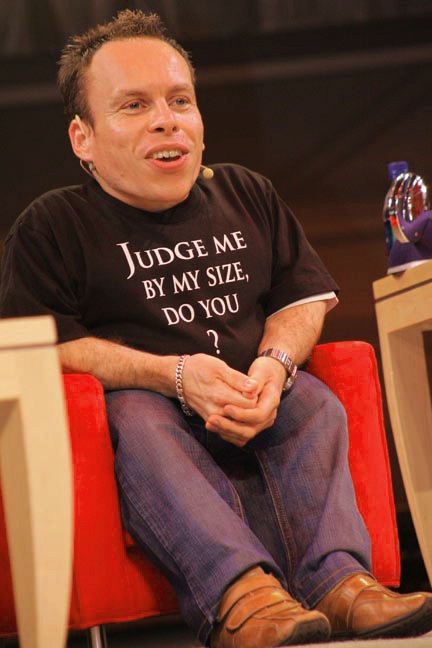
As I am in a bit of a rush (work, play, constantly late submitting my blog) I will just briefly talk about things. As usual! The 'little person' incident was the most embarrassing, and hence probably the most worthwhile talking about. I was helping out in a scheme for adults with learning difficulties, mental health issues, and such like, where they met several times a week to do things like art and cookery courses. This isn't very medical, but I was working with a social worker and it was a lot of fun, making paintings and collages and so on. I was working with a small group of people, making a collage to take back to my flat, while chatting to them about their problems. Very informal, but I think the main reason for this scheme is social. I was talking to a person with abnormal growth, meaning he was less than 4 foot high; he was telling me how he got a lot of insults because of his height, and I was asking him what the correct term was for a shorter person. [He told me he calls other shorter people midgets, but didn't think that was PC for me to use, so I should say 'little person' (which I think sounds a little bad), or shorter person. Anyway, during my talk he was telling me how he was very good at collages, and showed me a very large, A1 sized one that he had been doing over some weeks. He was telling me how the difficulty was in the size, and keeping it homogeneous, and I (for some reason) just blurted out "well, they do say bigger is better"... We had quite a good relationship by that point (before, not after) and I was not even thinking about his size when I said it, just about the mural... Needless to say it didn't go down all that well (though we did patch things up by the end). Very awkward. I won't be making that mistake again.

Famous actor suffering from dwarfism - Warwick Davis.

Monday, 21 January 2013

Mocks

Hi,


A new week in psychiatry, though ruined a little towards the end by the ubiquitous snow which meant I ended up having to cycle through a blizzard! This week started with a mock test (to prepare us for finals), and had a selection of clinical placements and lectures through the rest. Sadly, one of the clinical placements I was most looking forward to, a placement based around people with HIV who had psychiatric problems, was cancelled. I thought it would be very interesting, as some psychiatric problems lead to people having much higher risks of contracting HIV (such as hypersexuality in mania), while addictive problems such as intravenous drug use, which are also covered under the psychiatric remit, can also lead to higher rates of HIV. As well as psychiatric reasons for contracting HIV, HIV infection can itself lead to psychiatric problems, such as anxiety and depression (from having the illness) and HIV dementia. The breadth of possible cases here could have been very interesting, but I suppose I will never know.

The mock clinical examination we had at the start of this week was sold to us a good chance to practice some of our history taking and examination, to help us start to prepare for finals in a few months (Finals in only a few months... Oh god...) but I thought it was more of a chance for them to scare us witless into revising really hard, so they don't have to explain why so many people have failed. It consisted of a range of stations, and the feedback I got from them seemed to conflict. The consultant running the chest pain history station told me that, while I got in all of the relevant questions [things like shortness of breath, and family history of cardiac disease] (one of the few to do so!) -I was too abrupt, and needed to be more personal towards the patient. The next consultant, in a station where the patient was suffering from weight loss, told me that I was too 'chummy' with the patient and I needed to me more formal and direct. While this does show that I need to change the style I use for examinations (and towards patients) it also shows me how objective some of these exams are - as I was being the 'same' (as far as I could tell) for each of these. I suppose some consultants prefer a much more friendly approach, while others may want you to be more efficient. I am sure that, whatever they prefer, they won't fail you on what they think of your style. At least I hope so!

Other than in the exams, I also saw some patients this week in a visit to the secure ward in the regional psychiatric hospital. I have been here before, during my third year psychiatric placement, though I can hardly remember that far back! I number of keypad and camera-operator opened doors let you in in an airlock type fashion into a rather nice ward. It is a far cry from the images of asylums in film!

Nothing like this at all.

In there I have some interesting talks with patients, whose circumstances were quite unique, so I will not go into them too much in the interests of confidentiality. There was an undercover policeman who had become so guilty at his work he had become a serious suicide risk and had to be supervised 24 hours a day, and an immigrant from the eastern block who had been in this country for years before trying crack cocaine, becoming psychotically confused and throwing bread all over a M&S supermarket, after becoming convinced that the people were seagulls. Once admitted to hospital, this man had become involved in a number of fights with other residents of the psychiatric hospital, though when talking to him myself, I thought he seemed very measured and in control, and he seemed to have great 'insight' meaning that he now understood that he was ill, that the hallucinations were not real, and that he needed to take these medications. The synopsis? Don't try crack!


Wednesday, 16 January 2013

Drugs


Hi,


I'm back, after a nice relaxing Christmas, and ready for my last set of rotations as a medical student - an exciting (and very scary) thought! I am starting back on a 4 week psychiatry rotation, something that I haven't done since my 3rd year (3 years ago!). It looks to be a really interesting selection of things planned for me, mostly based in the community, but with some short stints in psychiatric hospitals. This week, I have to brave all of the introductory lectures, have a very interesting session in a 'Substance Misuse' clinic, have a few psychiatric clinics, and have to section a patient and admit them to a secure psychiatric hospital.

The introductory lectures were more interesting than normal, as the people running them had thought up engaging games to help 'teach' us about teamwork and so on. My favourite part of this was a game where they created four groups: one made of consultants, one mixed consultants and students, one of random students, and the final one of students who had chosen to work together. They had to each look at a complex picture and talk amongst each other to recreate it as perfectly as possible. The idea was to show how people take leadership roles, how teamwork is important and so on. This was all well and good, but the fun came from comparing the sketches done by the three teams with students in with the one which came from the consultant group. I am not sure if they were meant to do very well, as they are all used to working in teams, but their picture looked as though it had been drawn by a child who couldn't be bothered to play. Despite it being a grid-based-robot-like figure, they had just scrawled a shape onto it. Perhaps their brains are attuned to recognising difficult diagnoses, to the extent that their art skills have regressed to pre-primary levels.


Most people's pictures looked a bit like this


The consultant's image looked more like this


Well, I digress away from my clinical experiences. The best part of this week was attending a 'substance misuse' centre, where people who are addicted to various substances come to receive safe doses to help them stabilise their lives. This may mean giving them methadone every day (pending an alcohol breath test), or may mean giving them other medications such as benzodiazepines to keep their addiction in check. The thought behind providing these medications is that many of these people who are addicted to drugs spend much of the day trying to beg/steal money for those drugs, then trying to find a dealer, meet the dealer, take the drugs, and then starting the cycle all over again. As the people take the drugs as a coping mechanism for problems they have had in life, supplying the drugs in a safe environment means that they have a lot more time in their day to do things like train for a job, or look for housing. Once these problems such as education and housing are more stable, the person is less likely to need to rely on the drugs, and then you can look at getting the person off of them. Just trying to take away drugs doesn't work, as it is removing their coping mechanism, which they need for their difficult lives. Talking to patients, I heard some very upsetting stories about abusive childhoods, about losing loved ones and friends, and one person had his girlfriend stolen by a pimp who wanted her to be his prostitute, and was then kidnapped by this pimp, who tried to get money for more drugs by holding him ransom for over a month. I have had such a 'soft' and easy life, I cannot begin to imagine what some of these people have to go though. Its impossible to judge people for using coping mechanisms such as drugs and alcohol when you have no idea about the torment they have to go through in their lives.

As well as this enlightening trip to the substance misuse clinic, I spent some time in psychiatric outpatient clinics where I talked to a number of patients with different psychiatric complaints, such as schizophrenia and bipolar disorder. The most interesting part of the week came when my consultant and I were called to come straight to the hospital to assess someone who had been admitted through A&E who seemed very manic. This was a 40 year old Irish lady who had come across to Britain to look for some records. It was very hard to find out anything more on top of that, as she spoke very fast (pressured speech), and was very hard to follow (flight of ideas). As well as this, she was very dis-inhibited and tactile, and was trying to stroke me and kiss my hand while I talked to her. By calling around her current GP practice, we found she had a diagnosis of bipolar disorder (though she denied this) and usually took medication for it. She could have left the pills in Ireland, though I think she stopped taking them while over there, leading to her spontaneous trip to Britain. She was clearly very unwell (though I am sure some of the 'pressured speech' just came from her being Irish), and so was sectioned under Section 2 of the Mental Health Act to be assessed and hopefully taken back to Ireland as soon as possible for proper treatment. A very interesting experience for me, though she seemed so lovely and caring - I felt very guilty being part of the team who was keeping her in hospital when she just wanted to 'go outside and do roly-polys down the hills'.
 
UA-12501063-1