Showing posts with label Year 4. Show all posts

Sunday, 22 July 2012

End of 4th year


Hi,


This was the final week of the year, meaning I am finishing my fourth (or 5th if you count intercalation) year of medical school. One year left (or more accurately about 10 months) until I finish medical school, and get to graduate as a doctor, assuming nothing untoward happens in the meantime! I am very sorry for the quality of my posts fizzling out somewhat over the last few months, but time in the hospital, tiredness from too many early mornings and trying to maintain a fun social life has impacted this blog a little. Its a scary thought that (hopefully) this time next year I will be a doctor, despite still feeling as though I don't know anything. Hopefully next year will change some of that and I will feel more prepared by he end!


This year has been brilliant, though. It has been more relaxed than my third year, with a lot less time on hospital wards and on ward rounds, and more time in teaching seminars, clinics and lectures. A shame, as I enjoyed spending time in the hospital, but a different teaching experience doesn't mean that it is bad. I have seen some pretty great things this year, starting off with my elective in Tanzania, where I wrote a post a day. That was very eye opening, seeing the different health needs of the population, and how it was impossible to treat people with no resources. he elective was definitely my favorite part of this year, and I would love to go back to Tanzania some time to help more, when I know more and could be of more use. Throughout this year I have seen some very unusual things, such as the (and I am still amazed by this) GP who put their patient on diamorphine (heroin) for their painful arthritis... Many of the things that I get to see are too brief to mention here, such as some of the fantastic lecturers that we have had (the one obsessed with "eminence based medicine" over "evidence based medicine" comes to mind), or the clinic where the doctor who didn't believe in fibromyalgia was proven correct. Fibromyalgia is a very 'non-specific' disease, causing symptoms of pain and tiredness without many signs that doctors can test for (such as blood results) to prove that it is there. I do believe that this illness exists, but some doctors do not believe these patients and think that these symptoms are being made up for various reasons. I was in a rheumatology clinic with one such doctor, who was acting slightly skeptically towards a woman who had hobbled in on a stick. I was feeling sorry for this woman, who was becoming more and more frustrated with the doctor who, while not bluntly coming out with his disbelief, was acting in a way which showed his skepticism. After she left, we could hear her bad mouthing the doctor to the nurse outside the consultation room, telling the nurse how poorly she had been treated and how she felt that the doctor was not taking her seriously. A few minutes later, as the doctor was dictating the patient notes to send to the GP, the nurse cam running in to point out the lady who had left the hospital and was now standing on the street, visible through the windows in the consultation room. She had hobbled out slowly to the zebra crossing, looked around her, then tucked her stick under her arm and strolled off at a happy pace, clearly miraculously cured. The doctor enjoyed this 'victory' proving that fibromyalgia patients were just benefit frauds, but I think that some people just choose to exploit this 'unprovable' disease for their own gains, which ruins those with the disease's help.


Anyway, I digress, I was just trying to point out how there are so many stories that I get to be party to as a medical student, but do not have the time to put into this blog. As well as all the hospital experiences, writing this blog is also very rewarding. Thank you for all of your lovely and constructive comments, which help me keep writing, and show me that it is actually useful for some people. Less thanks go out to all the spam that I keep having to delete, though some of it is pretty funny in its own right. I copy one I deleted off of last week's post below.


Viagra is an oral medication for the treatment of male impotence.
Infertility (or expansive dysfunction) is settled as the inability to achieve or reassert an building comfortable for sexed relation, and includes the unfitness to get an erection as a termination of sexy stimulant or to regress your construction preceding to exclamation.
I really like the fact that they seem to have translated it from another language, changing 'erection' into 'construction' and 'building'. 


Anyway, I will be back late August when my final year starts, I am currently with a group of friends on holiday for a week, and I am volunteering at the olympics later, lots to keep me busy until next term. Thanks for reading this year, and I hope it is still interesting/useful for you.


Enjoy the sun!

Tuesday, 17 July 2012

On call


Hi,


This was a pretty exciting week, and not just compared to the pretty humdrum weeks that have passed by recently. This week I spend an evening with the trauma and orthopaedic team on call, followed by a day carrying out the following ward round and surgeries. While other things did happen this week, this was by far the most exciting, which helps confirm that I want to go into some sort of emergency/acute medicine as a career. While I don't enjoy the orthopaedic (or any) surgeries, they seem routine and boring, having to deal with real medical emergencies right there right now is very exciting. I would love to do that later (hoping I have the knowledge), but i get ahead of myself. I will say a little about what the on call was like and why it was so much fun.


The on call, as a medical student, involves going to the hospital mid afternoon and attaching yourself to one of the orthopaedic team until (in my case) about 11PM. Most of the time we have spent in the hospital this year has been in clinics and during the day, so getting back onto the 'hospital floor' as it were, and working at a more unusual time is an exciting thought in itself. After arriving I attach to a registrar, along with my medical student colleague, who works mainly with fractured hips. She is a really friendly, fun, and helpful doctor which makes the evening fly away.


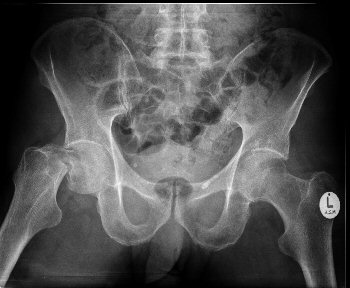
We spend a lot of the time in the A&E department, and as she is the surgical on call, we also go to wards where patients are reported by the nurses as getting sicker, or needing a review, to see how they are. In the emergency department we see 3-4 fractured hips, all of them are in elderly people who have fallen (either through a trip or through a medical condition such as a heart problem) and broken the top part of their femur where the lump makes it into a ball to join into the hip. These are called 'fractured neck of femur', abbreviated to #NOF (as orthopaedic people live abbreviations) and need surgery the next day to replace the head, before it starts dying and you lose the use of your hip. These patients are usually in a lot of pain, and need to have their medical conditions controlled fast in order to operate on them the next day, for example reversing warfarin therapy (for AF) by using vitamin K, so the patient doesn't bleed out during the surgery the next day.


The right of the image (labeled L for patient's left) is a normal hip, whereas the opposite side is a displaced [moved out of position] fractured neck of femur


We soon found out that these patients were the tame side of the on call, as we were called to a polytrauma patient, who had crashed and rolled his truck, and become stuck inside for some time before getting to the hospital. Various specialists are summoned to the emergency department by their bleeps, such as anaesthetists to help stabilise the patient's airway, which goes off when the ambulance lets the hospital know that it is bringing in a trauma patient. The buzz in the air as these people collected, putting on their lead gowns to protect from the portable X-ray machine used to look for breaks and the like, was very exciting. Once the patient arrived, strapped to a stretcher with blood smeared limbs visible in the folds (just like in a TV show) the atmosphere calmed down from that excited buzz to a calm businesslike feel. There are about 10 people or so around the bed, each having jobs to do, with a leader at the foot end commanding people and assessing the overall status of the patient. The anaesthetists work at the head end, while other doctors put in cannulas to give fluids or blood, and others perform a head to toe survey to look for injuries. Scans are taken and it is decided that the patient needs a CT because of a large injury to their head, and they are quickly taken off. All very exciting, and amazingly organised. I would love to be part of that sort of team one day, working together to save someone who is critically ill.


It wasn't just surgical cases that I saw while on call though, as when we were called up to the wards for patients who had problems, these problems were usually medical. For example, one patient who was in a few weeks after a knee replacement (waiting for nursing home) was reported as acting 'weirdly', and after we got there and tried to talk with her for 10 minutes (hard to communicate with) she started having a seizure in front of us. There was just this one doctor and the ward nurse around to try and work out why this was happening, and control the seizure (a very scary thought that that would be me some day. I need to learn so much more first!). The seizure proved difficult to control, and due to some other circumstances a 'medical emergency' call had to be put out which, similar to the trauma call, had a good variety of different medical personnel arrive in minutes to help with the situation. All very exciting, and the patient's seizure was stopped, though they think that she had something like pneumonia or a PE which had lead to this. Both consequences of staying in hospital for too long, a shame that she couldn't just go back to her nursing home.


All in all, a really exciting week, with the on call being full of the reasons that I want to be a doctor. Unfortunately I also talked a little to the doctors about their hours. This came up because I saw that, when I left the hospital at 11PM there were a few doctors who were set to stay on all night, who seemed pretty busy. When I arrived the next morning for the ward round, they were still there, went on the ward round then started their operating lists (being surgeons). This seems crazy - do they have time to sleep? While in a clinic for people with fractured bones, I asked one of the registrars about this, and she told me that she has worked 117 hours this week. That leaves 51 hours of the week left, or about 7 hours a day not in work (assuming she works the same amount each day). That is a hell of a lot of work. While nights give the 'chance' to sleep, realistically very little sleep happens because of all of the admissions and care that people need. A scary prospect for a medical student, where finals seem like the biggest challenge on the horizon. She was less upset about it than I would have thought, though she did admit that it made her grumpy, and she was upset that she only got paid for a fraction of the hours she did, die to the European Working Directive (48 hours max a week)...

Wednesday, 11 July 2012

Morning stiffness


Hi,


More delays to blog publishing - I would be a terrible journalist! This year is drawing to a close with only a couple of weeks left until summer holidays, the Olympics and the count down for my finals! This week had some interesting fun with joints, including clinics and surgery, where I saw plenty of knee replacements.


Exams all over now, which is a relief. I think they went OK, but you can never tell until you get the results, so I don't want to be premature. Quite exciting to think that those are the last exams that I will have to do before my finals, which are the final hurdle in the way of becoming a doctor. Exciting and scary... I don't feel ready in the slightest yet, and there is still a year left, so perhaps I don't need to worry too much.


Anyway this week I got to sit in on a lot of knee surgeries. Being in orthopaedics, much of what they want to do is bash away on bones to make them right again. While the orthopods (as they like to be known) fine this all exciting, drilling away into the bones with drills, or chiselling away with other metal implements, I think I would find it a bit boring if I had to do it all day every day. It is certainly exciting while you watch the first one, seeing what a joint looks like inside, or even more exciting, a replacement of a joint, where an old joint is replaced with a new one ('revision'), where the skin is cut open to reveal a shiny metal joint! Awesome! (Terminator!) Either way, after I had seen 3 or 4 of these I was becoming quite tired of it. I am sure it is different when you sit in the operating seat (literally) as there is much more to do than watch, but I still don't think its for me. Odd, as I loved playing with Meccano as a kid. 


Other than the rather boring surgeries (each to their own) I also got to sit in on a clinic with a really crazy locum consultant. I had not seen her before, and its unlikely that I will see her again, but she was very strange! Not in a negative way, as her patients clearly loved her, but I had no idea what she was doing. She spent about 5 minutes (no exaggeration) working out her left and right to ask the patient which foot hurt, and refusing help from the patient or me. In between the  patients (on an overcrowded list) she would take 10 minutes or so to talk about something seemingly out of the blue. One time it was how she used to have singing lessons, and how her singing teacher would never talk to her, only sing or mime (so as not to damage her singing voice) and other times it would be about how hard things at home were for her as a locum, and her family problems. Nice to be talked to, but not sure why, or whether it was the best time and place for it. 


The best moment in the clinic came when someone had come in about a problem with her knee. I was running through all the routine questions that would help get a diagnosis, and for one I asked if there was any morning stiffness at all. The patient, quite innocently, answered that "I don't have anything like that, but my husband usually does"... A question or two later quickly confirmed that she wasn't talking about her husband's joint problem. A hilarious, if not slightly embarrassing, lesson in making sure that your questions are phrased to avoid any misinterpretation! 


In case you didn't get the confusion

Wednesday, 4 July 2012

Quicky


Hi,


Just a quick post, apologising for poor updates the last few weeks. I have an exam in a few days, and what with moving house, my American friend getting sectioned and having to move the rest of his flat back to America, and the revision, Mr Blog has become somewhat neglected. Seeing as neglect (in kids) is linked to cognitive problems, failure to thrive, criminal activities and more, I will not keep up my poor treatment for fear of the effects, but give me this one week to revise.


Trying to revise while going into the hospital (with the nasty early mornings still here) isn't a perfect situation, leading to working late at night, which makes the mornings even less fun... Still - some fun contrasting clinics this week, one with a very 'old school' rheumatologist, while the other was with one was a younger consultant. The difference in their teaching styles was very interesting, and I am sure you can guess which was the more abusive... Both were fun in their own way though, and I do think I learnt more from the abusive one!


I am sure he would be even more abusive if I failed this upcoming test, though, so I will put my nose back to the grindstone.


Talk soon!

Monday, 25 June 2012

Early mornings


Hi,


It seems the higher up the medical school-ladder you move, the further away you need to travel for your placements. While this seemed fair in previous years (letting those who know the least stay close to home and all that) I am starting to change my mind. It is so tiring! For example, this rotation has 8.30 starts at a distant district hospital. The buses here run one an hour, getting in at 45 minutes past the hour. This means I have to arrive at 7.45 in order to be on time. Seeing as the journey on the bus is an hour, and getting myself to the bus takes time, I am getting up before 6AM. Ungodly... This would be (just about) acceptable if it was worth it, but it seems as though these sessions keep starting 20-30 minutes late, meaning I could have gotten up an hour later if I had known. Getting up at 5.45 is a lot earlier than getting up at 6.45! Anyway, rant over...


Because of these stupid early morning starts, impending exams-and-presentations-of-doom and the fact I am currently trying to move out of my house while still in this extended term-time, I am not being too successful with this blog, for which I apologise. Clinics have been very interesting however. Rheumatology seems a very complicated subject, that collects lots of the parts of medicine that other specialities seem to 'mysticize' or don't really understand, including the House favourite Lupus, and the poorly understood disease fibromyalgia. All of these confusing connective tissues disorders, along with the multitude of types of arthritis, which all seem to cross and overlap with one another is very confusing for a poor little medical student! Fortunately, it was highlighted to us how out of our depth we were in this field in one clinic, the favourite quote I take away with me being "Don't feel for heat with your knuckles, you're not a gypo"...


Other than our somewhat outspoken un-PC consultant (or perhaps because of it) this clinic was very interesting. We saw a boy who had had severe burns to his face, which he had received plastic surgery for, but had (somehow, inexplicably) lead to him developing some kind of juvenile arthritis. There was an elderly gentleman with psoriatic arthritis who had been referred by his GP for better treatment as he was still in pain. For some reason the GP had prescribed him diamorphine (Heroin) to help with his pain. This is normally reserved for the worst kind of pain, as people are dying. I am sure he was really enjoying its pain-killing properties! There was a 40 year old woman who had been put on a biologic anti-TNF agent to help treat her rheumatoid arthritis. This had changed her life, allowing her to dress herself, change her grand kids nappies and hold a pen. The side effect was she was losing all of her hair, including her eyelashes. Despite this, she was adamant that she didn't want to stop taking this wonder-drug (which costs about £20,000 a year). I was really moved by this, an attractive 40 year old is willing to lose all her hair in order to get rid of this disease - I suppose this really highlights how debilitating these diseases can be. She was willing to give her 'right arm' to return to normal, and saw having to wear a hat as a small price to pay. These sort of patients, whose lives are turned around by successful treatment, are what really makes clinics and being a doctor. If I have a few people, every once in a while, who I can feel that I help half as much as this lady, all these early mornings will be worth it.


Its not laughter, its not paracetamol, its not even talking and understanding. Some doctor  decided that the best medicine to cheer up his unhappy patients would be heroin... Brilliant!


Now you will have to excuse me - I have to go to bed, in order to be up before 6 again...

Tuesday, 19 June 2012

Vioxx and deductions


Hi,


I started my last rotation last week, meaning that in 6 weeks time I will have finished my forth year of medical school! This rotation is focused around rheumatology and orthopaedic surgery, meaning joints and bones. This is the last major speciality that I don't have any real clinical experience of, so in a way it is nice to be rounding off that basic medical knowledge of knowing a little bit about something from each speciality. Seeing as my final year is just repeats of rotations I have done already, but with more expected from me, it means I can no longer use the excuse that 'I haven't studied that yet' when my family or friends ask me difficult medical questions!


I spent some time in a physiotherapy clinic as part of this rotation, and I was very impressed! The person I was working with only looked a few years older than me, but she had an amazing well of knowledge on muscular conditions, their causes and good ways to treat them with exercise regimes. A totally different ball game to the things we are taught in med-school (basically just the anatomy). They actually get to heal people with their hands, all her patients seemed so happy with her and by moving their limbs around she healed them - I have decided that physiotherapists are the medical equivalent of Jesus, and any patient I see with any joint or muscle problem for the rest of my career would definitely benefit from a referral to a physio!


As well as spending time with the physio this week, I spent time in a nurse lead clinic for those on biological therapeutic agents for inflammatory joint conditions. This was much more medical, and much more related to those years of lectures I have been through. Very complex though; I think rheumatology is going to take some time to get my head around. The biologic agents these patients are on are basically antibodies which have been made in a lab, which are injected to reduce the levels of inflammation (and thus help their inflamed joints). They all have names ending in __mab such as infliximab. These are very expensive, costing about £20,000 a year per patient, but they really do seem to help. I bet the patients are happy that they don't have to try and foot their own bills! In this clinic I met a person who had suffered a number of heart attacks some years ago, as he had been put on the drug Vioxx. As can be seen by the link, this drug was pulled off the market after it was found that the drugs company who had tested it had withheld information showing that it increased the risk of problems such as heart attack. After all, if you have spent millions developing a new drug, no-one will take it if it might kill them, so that isn't the sort of information you want available to the general public! I remember it being mentioned in a lecture in my first (or second) year, how it was found by using the 'track back changes' function on word when looking at the research they had submitted; meaning that it was previously included but was purposefully removed. Ruthless...  The first time that I had met someone affected by this, and he was remarkably un-bothered by it all. I would probably still be trying to sue them!


I also noticed that (of the admittedly rather small sample size) more than 50% of the patients with Rheumatoid Arthritis (RA) we saw were keen ornithologists, often going on field trips to see birds. RA is believed to have appeared as a disease in the last few hundred years, as while there is evidence of skeletons being affected by different arthritis-related-illnesses, there is no evidence of skeletons with RA before this time. People have guessed that this may be a new environmental substance, or viral infection, that is leading to this 'new' seeming (and certainly not uncommon) disease. Using my expert medical-student knowledge, and this huge sample size of 5 patients, perhaps birds may hold the answer, perhaps they somehow lead to us developing RA, through some kind of parasite or virus they can pass on. If this turns out to be the case, you know where you read it first!


If my brilliant scientific deduction is to be proved correct, we will have to be the ones to do something about it. Birds are inherently lazy...

Sunday, 10 June 2012

Follow up


Hi,


Relatively relaxed week this week. I spend some more time in HIV clinics, follow up the rabies-bitten patient who I spoke to last week, and present a case based around Fordyce's spots for my end of rotation assessment. 


In the HIV clinic I am with a different consultant to the one I was placed with last week, and this one is also gay. Somewhat more flamboyant than the person I was with last week, his entire patient list seems to consist of middle aged HIV positive gay men who have a crush on him. When I say it seems to consist of, I mean that every single patient who we saw together was a middle aged, gay, HIV positive man. HIV positive people have several outpatients appointments each year, to make sure that they are still doing well with their disease and drugs (it is very important that they take the drugs every day to stop resistance occurring), which means that the patients get to know the specialists very well. Patients switch between consultants to find one that they like; for example all of the HIV+ afro-Caribbean people are managed by a large, jolly Jamaican woman. Obviously all of these middle aged HIV positive gay men like flirting with this flamboyant consultant, who is very informal with his patients. I can tell why they like him though, he is very complimentary towards them, almost towards being inappropriate, though they clearly love it, and love him for it. The patients range hugely (though always keep within the male, gay, middle-aged category). There are high powered bankers, through to homeless down and outs. All are treated with the same glamorous, dazzling fashion. It looked great fun to be a patient of his, and I know that if I had HIV I would want to come to him (though I don't quite fit into the necessary bracket...)


The rabies-man (hopefully a name that will prove to be incorrect) has refused any medical treatment for his bites. He has decided that chromotherapy is all he needs to balance his bodies energies and push the rabies virus out. I really hope that the dog didn't have rabies, as this is one person I don't want the medical profession to be saying 'told you so' to. Perhaps the worry should be if he doesn't get rabies, and spreads the word that colour-therapy can cure rabies, meaning many other people might be exposed...


Rude jokes and general 'banter' should probably be kept for class mates, rather than your examiner...


At the end of the modules we have to present patient cases to the rest of the year. I was presenting someone who I saw in a sexual health clinic who came in and told me, and I quote "I've got lumps on me knob". It turned out that these lumps were just a normal physiological phenomenon known as Fordyce's spots, just large sebaceous glands on the shaft of the penis. The consultation was pretty simple, until he started squeezing these spots to show us what would come out of them... Pretty gross... Either way, I somehow accused the consultant I was presenting to of using prostitutes in front of my year - pretty embarrassing result of a 'witty' quip, but hopefully I won't get kicked out for it.

End of sexual health rotation, pretty uneventful week, and I will keep you up to date with how things go next week in my orthopaedics rotation! My final rotation, and the one with my end of year exams in it!

Wednesday, 6 June 2012

Gay doctors and HIV


Hi,


Sorry for the recurrently late posts. The Diamond Jubilee has meant lots of fun things to distract myself from and make the most of this 4 day weekend, though also meant that I haven't been with a computer to post until today... Despite my poor posting, I do have things to talk about. Last week was pretty interesting, mainly spending time in outpatients, in both an HIV clinic, and a general infectious disease clinic.


I have noticed that a larger proportion of HIV doctors are (outwardly) gay compared to other medical specialities. Perhaps this is linked to the fact that when they were training this disease was ravaging some of those in the gay community, and they were determined they wanted to help stop it. Perhaps it is related to the fact that there are more gay patients in this speciality, which attracts gay doctors. Perhaps it is just a more accepting patient group, and doctors who are HIV specialists feel happier to be open about their sexuality... Whatever the reason, this is a trend I noticed, and when going into the clinic with the HIV consultant I was secretly trying to work out whether he was gay or not. By some coincidence (small world and all that) one of my friends who I knew outside of hospital life walked into the room, and after the exclamations of surprise at meeting each other here, he introduced me to his husband. I knew he was married, just not to who! It definitely solved the question over whether the consultant was gay though!


In the infectious disease clinic, the most interesting case that I saw was a man who had been travelling through Africa and had been bitten by a dog. He had come in with a walking stick, wrapped in a shawl, very 'new age' style, and talked about how he had been travelling by foot through the birthplace of man. This had been about a month ago, and he had been bitten by a dog, who was one of a pack belonging to a witch doctor. The witch doctor had assured him that there was no rabies in his dogs, because of his medicines, and so this man had travelled home without having any preventative treatment. Recently, with all the media coverage of rabies in the UK, this man's friends and family had urged him to get it checked by the doctors. Unable to diagnose rabies, the only thing that could be offered would be to treat him as though he had been infected, to reduce his risk of contracting rabies. He was not keen on this idea, talking about how he never had any vaccines as they harmed your body, and told us that he could probably get a natural cure in crystals. I am unsure as to why he came into the hospital in the first place, if he wasn't going to accept any treatment. To reassure his friends and family, I guess... After a lot of discussion, and calling the HPA, the man was still sure he didn't want the recommended treatment because it was not guaranteed to work. The recommended treatment consists of immunoglobulin and a vaccine as soon after exposure as possible. This lead to a long discussion about medicine, and how very little is guaranteed. He demanded proof that it would help him, which we then emailed to him to read. He decided he may come back in after reading it if he and his 'healer' decided it was 'appropriate'. Its very strange how someone who is so obsessed over proving things work practices types of medicine that many feel do not have any proof. Perhaps he is more used to the 'definites' that some alternative medicine practitioners work with. This homoeopathic diamond will definitely cure your breast cancer... Perhaps that helps the placebo effect...


I hope he does come back in for the treatment, but it seems that he won't. The odds are that he hasn't got rabies, he will chose crystal therapy, and feel that it has protected him. I hope that's the case, as the alternatives are pretty bad. it seems silly, but all these lectures about 'autonomy' are all about letting patients make decisions that we feel are misguided, and I just need to remember that it is his life, and my beliefs. He should be allowed to follow his own beliefs. 

Monday, 28 May 2012

Celebrity STI


Hi,


Back into the normal run of medical school, and enjoying the fact that I am relatively free from work a the moment, while the weather is also lovely. Usually it seems that the amount of sunshine is directly proportional to the amount of work I have to do, and thus the amount of time I have to spend inside on a computer. Not any more! I can enjoy a cycle to and from the hospital to learn there, and enjoy my time away as my own time... At least until the exam and presentation in a little over a month. Still, they can wait!


This week I spent some time in infectious disease outpatient appointments, and infectious disease ward rounds, and some more time in the sexual health centre, where a somewhat familiar face made a visit.


Clearly, because of confidentiality, I am not going to say anything about the B-list celebrity who was coming in for a sexual health screen, but it is interesting to note that these poor people have to live their whole lives in the public eye, with all these people they have never met knowing about intimate details from their lives. I am sure some use these details for their own publicity, carefully cultivating certain images, but its sad to know that others just want to get on with things and not have rumours fly around about them. Anyway, celebrity or no - everyone should have regular sexual health check ups! Apart from this unexpected visit, the sexual health clinic was pretty similar to previous times I have been there. I would talk to the patient on my own, present them to a doctor or nurse, who would then come in and do an examination with me. There were a large number of teenage boys who had come in with lumps on their penises which had been there for some time. All of these were diagnosed as Fordyce's spots, a harmless feature which just occurs on some penises. Strange that so many came in in one day for these lumps. Perhaps it was sex-ed week at school... Doctors often comment that patients seem to come in clusters of disease, where you won't see something for some time, then a number of that particular condition will come in in one day. I suppose its like buses...


Sexual health clinics are slowly losing the stigma that people have attached to them... Come one come all, they have free sweets!


Other than the time in the sexual health clinic, which I am still really enjoying, I got to join some outpatient sessions and ward rounds with the infectious disease doctors. As I did an intercalated year based around infectious disease last year, I was hoping that my amazing knowledge of all things infectious and puss-filled would come in useful, but it has turned out that I actually know basically nothing about clinical infectious disease. Who could have guessed that having to learn each of the proteins that make up HIV and how they are put together would not have any real-world use. (I use real-world here to mean clinical doctor. I am sure most of the things I learn have little use outside of medicine...) 


Despite my astounding lack of knowledge (as in, I know the same for infectious disease as I did for the other specialities) I really got into the infectious disease clinics. Most specialities have 'bread and butter' cases which make up most of their work load, e.g. endocrinologists see a LOT of patients with diabetes and thyroid disease. This has always put me off of specialities, as I can imagine that the lack of variety would lead to it getting boring (for me, at least). Not so with infectious disease, it seems. The clinic consisted of a huge range of diseases from serious cellulitis, to endocarditis, osteomyelitis and HIV. From just one clinic this was a good range of disease, and there was a lot of detective work to be done as well. Many patients are referred to the infectious disease team with problems like PUO - a long standing fever, or generalised lymphadenopathy. The diagnosis is often not easy to find, as many of the tests are nowhere near 100% accurate at picking up the disease (such as TB) so clinical judgement is important.


One of my favourite things about the infectious disease clinics was all of the patients who have caught weird and wonderful infections while abroad. Obviously the problem-solving and diagnostic side of things is very interesting for these people, as they can be rare diseases, but hearing about their travelling stories (one was distributing free text books through Sub-saharan African slums) is fascinating. Made me want to go back on my elective (until we looked at the lump under the next patients skin, caused by botfly larvae growing under there before becoming flys...)


All in all a great week, and perhaps I will become an infectious disease doctor... Despite the fact that I saw some pretty nasty infections in the sexual health clinic this week, the worst things in medicine (in my opinion) are still those chronic ulcers in the vascular wards, with that necrotic smell from the dying tissue that fills the ward...

Tuesday, 22 May 2012

General Practice and my own list


Hi,


Busy week this week finishing off my big project, which is now happily handed in. As long as I have passed it I am good and happy. Medical school sometimes seems like a series of hurdles you just need to jump over to get to the end and graduate. One more hurdle passed (hopefully)... Because of this project, I didn't get up to too much this week either, taking the opportunities to stay at home and try and work (but mostly procrastinate) when possible. I did spend a bit of time in the hospital though, and more importantly, spent my last day with the GP I had been placed with. I got to run my own consultation list, which was pretty scary at first. As I got into it, it became easier though stranger, as I think the GP put some of her craziest patients on the list for me to talk to!


It was very sad to leave the GP I have been working with, its very unlikely that I will be with her during my GP rotation next year as the medical school tries to balance out rotations in large and small practices. This means that, as this GP practice is practically a polyclinic, I will probably be in a single room that doubles as the GP's bedroom next year. This is one of the most exciting parts of general practice, it comes in all flavours!


The GP had decided that for this visit, she would give me my own 'list' of patients to see, meaning  people who had called up for appointments had been given the option to see me. I wasn't going to be the only person seeing them, fortunately (unlike when I was in Tanzania), so this wasn't unsafe. It just helped the GP see more patients, and helped me practice running my own surgery, as it were. I was given log in details to the software used to display the appointments, patient notes, 'QOF alerts', and so on. Made me feel pretty important! I got used to the software, pulled up the notes for the first patient, and went out to the waiting room to call her name...


The first patient didn't go as well as I would have hoped, as she seemed convinced that I was a doctor, despite all my protesting against the idea. She opened with the phrase "Its a good thing that they assured me you were a doctor before I saw you walk through that door, as you do look very young"... I don't know who had been assuring the patient that the medical student was definitely a doctor, but it made her (probably) gout presentation a lot more complex than it needed to be!


This was followed by a couple of very straight forward cases where women wanted to delay their periods for a holiday and an anniversary. Not much I could do as a student here as much of these was prescribing, something that I definitely shouldn't be allowed to do yet! This was where the simple cases ended, though, and the rest of the day seemed to be filled with complex psychiatric patients. If I didn't know better, I would have said that the GP found it hard to deal with these patients who there is very little to do for in general practice, so gave them all to me to see instead... If I didn't know better...


I slogged through consultations with a number of people who had been diagnosed with borderline personality disorder (where I think I was demonised a little more than idealised), and as was beginning to give up hope with general practice, when a 10 year old girl came in who had been suffering from mouth ulcers in her cheeks. A nice simple case, or so I thought, but after a minute or two of talking I began to feel a bit uneasy. The girl had come in with her mum, and their relationship just felt a bit wrong. Not really sure what it was, but there seemed to be some tension and... well, I am not really too sure what it was. On talking with the GP afterwards (before deciding on a course of action, of course) she told me that this 10 year old  had been manipulating her mum and dad for the last few years into getting what she wanted after she had been caught stealing sweets from a local shop. It seems that as a GP you get to be part of everyone's life story, and hear about all those things that go on 'behind closed doors'. A great job if you are a bit nosey like me, but as it seems that everyone is crazy beneath the surface I may not be won over by the GP quite yet!


A borderline patient example with Barney - from the site in the top left...


Before leaving, I was discussing my patients with the GP and other practice partners. One of them, most eloquently, said that borderline personality disorder patients are the hardest to deal with in general practice, whether they love you or hate you, as they are very hard to get rid of. This is because you cannot refer them for counselling as you would with many other minor psychiatric problems "as it is like wanking for these patients, they just cannot get enough"... Not the most politically correct way of putting your point across, but I think I see where he is coming from. Perhaps counselling reinforces their behaviours by giving them too much attention. 


The GP who I have been with all of this year said some very nice things about me before I left, about what an amazing doctor I would make when I qualified and how she had every faith in me. Very glowing praise, and I am sure she says it to all medical students who she teaches, but it made me feel good. She has added me on facebook to keep in touch, so I will have to remove all of those embarrassing photos, but it will be good to keep in touch!

Tuesday, 1 May 2012

Alcoholic nurses?


Hi,


My last week on ENT this week, and another slightly late post. Sorry about this, but I keep getting distracted by other things in my life. Don't feel too taken aback, though, as these distractions are affecting the work I am meant to be doing as well - its nothing personal... This week I spent some time in ENT outpatients with a fantastic consultant, but spent a lot more time trying to help out a friend who has had some form of psychotic breakdown and has now fled the country.


The time in ENT outpatients was spent mainly with a fantastic friendly consultant. He showed a lot of concern for my ex-tonsils and was very jokey, while staying formal enough for (most) patients, and sharing a lot of knowledge. When I say formal enough for most patients, I mean things went swimmingly with all patients but one, where his joking fell embarrassingly flat. Here he was (for some reason) joking about the nurse who sits in the corner of the consultation room to help with the preparation of equipment, and saying that she needed to drink gin throughout the day in order to put up with him and the other doctors, and if the patient needed, they could borrow some of it. The patient took this a little too literally, and started an outraged monologue about how it was unacceptable for nurses to be drinking on the job, and the state of the NHS. Despite the consultant and nurse's best efforts, the patient wouldn't believe that this was a joke (because it sounded far-fetched that they were back-tracking now...) and was grumpy with the doctor and 'drunkard nurse' for the remainder of the consultation. Perhaps there will be a law suit coming this way!


A scope used to look down patient's noses to their vocal chords - one of the things the 'drunk nurse' had to prepare for the ENT doctor.


Fortunately, the other consultations were conducted in fully professional ways, and no more problems were had. The most interesting of these 'normal' consultations was a man who had come for the results of a biopsy of a lump in his neck. He had come in with another male, who we assumed to be his partner because of how they were acting with one another, and I noticed the consultant carefully avoiding any labels for this other person in the room (it would be embarrassing to wrongly call a brother a partner, and visa versa!) The biopsy had unfortunately shown a lymphoma, and this news had to be broken in a skilful and optimistic way. The two people were evidently very upset by the news, both crying, though the consultant tried to reassure them that it was very treatable. At the end, as they left, the questions they were both asking the nurse were the same things that the doctor had tried to explain. Usually, when bad news is broken to a patient, they don't hear much afterwards due to shock, and the 'you have cancer' bouncing around in their head.


Despite these clinics, by far the most exciting thing that has happened to me this week is that one of my friends has had what seems like a severe psychotic breakdown. His mum called me to let me know that things were not right, she couldn't really get hold of him and asked me to go and check on him. I went over to his house, as I couldn't get him on the phone, where he then proceeded to tell me how everyone was persecuting him. The police had it in for him, had sensors in his rooms in his house to monitor his movement and the phone companies had hacked his mobile to use the camera to watch him (this was why he wouldn't call anyone). The university had hacked his laptop, so he bought a new one, which had then been hacked and they had uploaded documents detailing how to plagiarise work efficiently (he assumes to get him in trouble) which had then mysteriously disappeared. There were people opposite his flat who were recording him all night in his room, which he could tell by the faint glow of what looked like a burglar alarm in their window. He knew there were people watching him as he could hear their voices mocking him, and talking about what he was doing. He hadn't left the house in a week, as he was afraid he would be kidnapped. And there was more.


He was clearly not feeling well, and being a good medical student, I took a full history. Key to note was the fact that he had been taking a lot of Ritalin, which he claimed was for his ADHD, but I think it was to help him do his essays and increasingly heavy work load. He had been taking more and more as his deadlines approached, and was now feeling like this. I thought this was probably related, but he was adamant that he had never had any problems before and needed it to be normal. He wanted to get away from this 'persecution' so I offered to let him stay at mine for a few days to get away from it and think about what he wanted to do. He was going to finish Uni in a month or two, so I didn't want him to do anything rash.


Anyway, he had a lot of stuff and wanted to pack clothes, so I took some of his items back in the bus (this was still too soon after my op to be cycling), did some research online finding out about stimulant psychosis (my best guess for cause) and then drove to his to pick him and his items up. I double parked my car due to no close parking with the hazards on, and spend the next 45 minutes ringing his bell and calling him to no answer. Annoyed with how he would just not open the door now, I tried to go home, but found that my car had now run out of battery. Very embarrassing given its stupid parking location! 


Either way, I sorted that out in the end, and then later that night his mum called again to tell me he had gotten a taxi to a nearby airport, and was taking a plane to get to another country. I don't know how he afforded this, as he had been buying a lot of new things recently (possible mania?) but he is now in a different country and trying to sort things out is ongoing. All of his items are still in the UK, from his mobiles to his clothes and expensive laptops. Crazy trying to deal with the fall out from this, but scary to see how someone who seemed (relatively) normal can flip to being so paranoid and uproot their life like this!

Sunday, 22 April 2012

Misogyny


Hi,


I am feeling mostly better now, which is great! Wasn't as great towards the start of the week, so I didn't go into the hospital much, but I did go into a teaching session with a consultant and a couple of other medical students, where we practice ENT examinations on each other. I also hear from a friend about some shocking sexism she was exposed to, from a surgeon who is a well known misogynist...


Most of our teaching comes from talking to patients, and trying out examinations or procedures on them. See the BBC 'Junior Doctors - Your Life in Their Hands' to see what I mean (though I don't really think that much of that that programme, many of them just seem so... unlike-able...). Hence why a few weeks ago I was practising ophthalmoscopy on patients under the directions of a consultant. The ENT consultants have decided that, rather than trying out all these ear, nose, throat examinations on patients - it would be a lot better for us to try them on each other, learning how not to hurt people by being hurt / hurting one another. A good idea, and its great to be taught examinations and so on as you do them, rather than read up on them and pretend you know what you are doing (as I have done before for an ABG). 


The problem with being taught on one another is that if there is something... gross.. in the examination it is a lot more personal. When you are with patients it is all par for the course and expected, but with each other it is a little bit stranger. I was doing this with 2 medical students, and the male one (slightly low on tact) was examining the females ears, when he remarked 'wow I can hardly see anything, these are full of earwax'. Clearly something that is very normal, ears produce wax, and some ears produce more than others... Not something you usually want to hear about your class mate though, and the girl was clearly a bit hurt by this. When I was later examining his nose, it had this giant bogie sitting it it , wobbling around - again, normal for a patient, the nose makes these things, but strange to be peering at a class mates! (at least it wasn't as bad as this one!). With my messed up throat after the tonsil operation, we all had something on the examination to see, just strange to see it on a fellow medical students. Perhaps this is why doctors are not meant to treat their friends or family!


Later in the week, on of my female friends was complaining about how she had been treated when she went into surgery (perhaps on a different rotation, perhaps not - who knows!). The consultant is a well known misogynist, and has previously voiced his opinion that he feels that women are wasting their time in medicine, and would be much more suited to being at home and looking after children. This is clearly quite a... contentious... opinion... Anyway, this consultant was asking the medical student questions, some of which she didn't know the answer to. Pretty standard, but this consultant was clearly not impressed. He asked some harder very obscure questions that she clearly wouldn't have a clue about, then told her she was wasting her time at medical school, because she was too stupid, and may as well leave. He then went on to say she would be a rubbish doctor, and he would write to her parents to tell them that they were wasting their money on her course fees... How rude! And misguided! Who pays their course fees up front now (top up fees), and everyone relies on student loan... There was no reason of him to say things like that other than to be rude and offend her. It was probably because she was a girl, as he doesn't speak like this with any males... It is a shame that the world of medicine is such a hierarchical place. I would love to think that if that happened to me, I would stick up for myself, but really it is hard to do. You cannot afford offending some consultant who signs off your clinical books, then acts as an examiner in clinical examinations later in the year. I would also like to think that I would stand up for someone if I was there, but I don't really know what I would do - such a risk, but would you be able to keep quiet?

Sunday, 15 April 2012

Recovery


Hi,


A brief post this week, mainly because I haven't been up to too much. This has been my week off for Easter, and I have spent most of it lying on the settee, watching day time TV and films. I was feeling pretty sorry for myself when I wrote the last blog, and up to about a week after the operation date. Now I am feeling better and better, great news! I can eat proper food and talk. I went to a friends birthday party yesterday, thinking I would be sitting in the corner unable to talk with people very much (not really like me at all) but hadn't really any problem. I did talk a bit too much, though, and have to go home a bit after twelve... Today I made a roast dinner with flat mates and ate properly! 


It is only after you have had things taken away that you realise how important they are. Hopefully, (and now this sounds like I am writing a reflective piece of writing for my medical school) I can use this to appreciate how being ill can make some people pretty grumpy and relate to this. I was pretty grumpy last week, apart from when I was taking too much codine and was just a little loopy...


Anyway, summary - I am now well enough to do the essays and work that I have been putting off and excusing 'because I am too ill' which would make me sad, if I wasn't so glad about this new found health!


To wrap up, please find below a picture of my throat 5 days after the operation. The uvula was more swollen before this picture, but I couldn't really open my mouth enough to take a picture of it. The white bits are probably because of the cautery used to seal off the cut burning and killing the flesh at the back of the throat, which is then coming off. The uvula is still pretty big in this picture (compared to my or anyone else's normal size) which I suppose is because of inflammation from the surgery. It was very awkward, as it felt like there was something there that I wanted to swallow all the time, and it diverted any food or drink around it when I tried to swallow all over the painful parts!


The back of my throat, 5 days post op. Most notable is the inflamed uvula. Sorry about the pictures if you think they are nasty, but I always find this sort of thing interesting!

Monday, 9 April 2012

My operation


Hi,


This week I got a taste of the patient experience by having my own tonsils taken out. Not to be content with this, fate decided that my rotation (now ENT) would have me observing other people having their tonsils taken out the day before my operation, just to get me in the mood... Since my operation, I haven't really been in a fit state to get back on the wards and have been lazing around home watching day time TV and generally getting bored. I don't know how people do it, there is so little to do at home, but I still feel too out of it to start the essays I need to do...


Before my operation, I spent some time in outpatients seeing patients with problems with their ears, nose or throat (as the ENT moniker would suggest). I can now use an otoscope to look in people's ears to see the eardrum properly, but I don't really know what I am looking for once I can see the ear drum. Perhaps that will come with time... I also spent an afternoon with an audiologist, where patient's ears are tested to see what pitch of sounds, and at what volume, can be heard, plotting diagrams like the one below for each ear. From this you can see things like hearing loss and possible nerve or brain damage. 


An audiogram showing hearing loss into the higher frequencies, the most common type of hearing loss in old age.


One of the audiograms was very unusual, and showed a big dip in the middle frequencies, meaning they needed to be a lot louder for the patient to hear, which then rose back to normal for the higher frequencies. This was mirrored in both air conduction (noise from headphone) and bone conduction (noise vibrated into skull via an alice band) suggesting the origin was not a problem with the outer ear, but instead a problem with the inner ear and nerves. The cause for this could be something like an acoustic neuroma, affecting certain parts of the nerve going away from the ear and thus the hearing signals carried by those nerves. Obviously we didn't tell the patient these suspicions, and instead sent him to the ENT doctor who could carry out investigations such as an MRI scan to see what the cause may be.


The day before my tonsillectomy, I was in the children's hospital watching ENT surgery, which was some tonsillectomies, a few people who needed grommets put into their ears (to stop the build up of fluid behind the ear drum) and one boy who needed the frenulum under his tongue cut, as it was too short, meaning he was 'tongue tied'. Obviously, given the operation I was having the next day, the tonsillectomies took most of my attention. The mouth is held open by a metal gag, and fabric swabs put into the back of the throat to stop blood getting down there. The mucosa that covers the tonsils is cut through with a diathermy, then the tonsils are scooped out, a stitch was put through the area where the tonsil was to stop bleeding, and the area cauterised for the same reason. It didn't look too much fun, but not too brutal either... The surgeon I was with this day was the same one who was down to be operating on me tomorrow, but had given tomorrows list to a different consultant, as he had to be at a meeting. A shame, as I had hoped I could check on his skill!


The day of the operation, I got up early so I could have some breakfast before my scheduled 'fast' time, then went to the hospital. I was in the afternoon list, and was feeling pretty peckish by the time I was meant to go into theatre... All part of the patient experience I suppose! Either way, the surgeon and anaesthetist came to see me before the operation, and both were aware I was a medical student, it must have said so on my notes. This made the explanations pretty simple for the operation. The operation was all fine (I was asleep, I just remember the anaesthetic making me feel very light headed and 'trippy' before I fell asleep) but I was in quite a lot of pain when I woke up. I got some fentanyl, went back to the ward, got some oramorph, and had to wait for 4 hours before I could go home to make sure I wasn't bleeding. My flat-mate was kind enough to drive to the hospital to pick me up to take me home, as I was told I wasn't allowed to use public transport because of the risk of infection. The nurse on the ward was really nice and kind; I think having a nice nurse is much more important than having a nice doctor. You barely see the doctor in your time in hospital, whereas you see the nurse all the time! 


Now I am just sitting around at home, taking my codine, paracetamol, diclofenac and difflam rinse as often as possible, feeling pretty spaced out. Easter holiday next week, so I won't be missing any time on the wards, just time that I should be spending doing my essay. I apologise for the poor quality of this post, but I do feel a little out of it. Perhaps I will have to go back to some daytime TV in a bit, though after what i heard last week, I will be avoiding Jonathan Ross! 

Monday, 2 April 2012

Patients


Hi,


A lot of the time in blogs, I talk about what I did (or didn't do), about what the hospital is like, and what I saw. Basically, a lot about me. Now, while I may enjoy talking about myself, this probably isn't why people read this blog, and it isn't really the most important (or interesting) thing in medicine. What takes this title probably varies between different people, but in my opinion it is the patients. While the diseases they present with can often be the same (with respect to their pathological cause), their stories about their lives, how they cope with their illness and everything else are invariably different and interesting. This week I will talk about some of the patients I saw in my last week on ophthalmology and at the GPs (in an anonymised way, of course, to prevent recognition...) from the morphine-dealing-mum to the side effects of Jonathan Ross


The ophthalmology clinic started with a wonderfully cheery looking Russian lady who had come in with a punctured eye. Worried about the risk of infection, the doctor wanted to find out how this had happened so as to get the best treatment. Despite all of his (and my) best efforts, we just had no idea what this lady was saying. It wasn't because of a language barrier as (I think) she spoke near perfect English. It was more that her accent was so thick it was unintelligible. The consultation meandered on for about five minutes with us absolutely unable to understand her, while she seemed to understand us perfectly. In retrospect, we probably should have communicated by writing things down, but embarrassed to admit that he couldn't understand what she was saying, the doctor just told her that he needed another opinion, sending her to one of the other specialists in the hope they would have more luck... Talk about passing the buck!


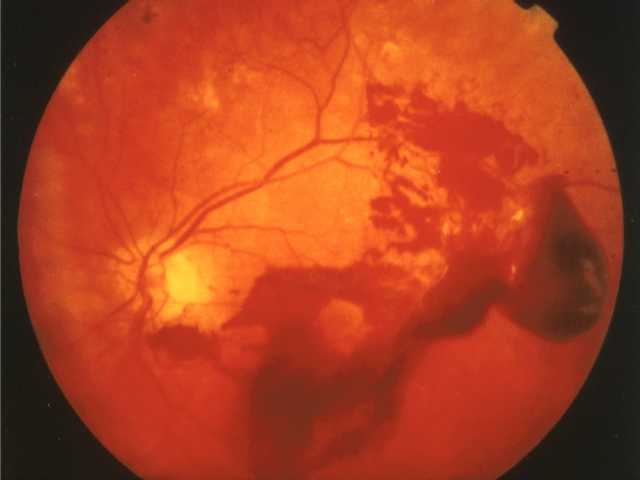
The next patient who came in talked English in a perfectly understandable accent, and on examination with the slit lamp, the ophthalmologist diagnosed him with a vitreous haemorrhage (basically a bleed in the eye). The ophthalmologist had left the room to collect a part of the notes, so I was talking to the patient about how this had happened. He works as a painter, and was having a night in, with some pizza and TV. He was watching reruns of 'Friday Night with Jonathan Ross' when he suddenly started getting floaters in his vision, along with loss of vision. My verdict? Jonathan Ross makes your eyes bleed...


A picture of the back of the eye (the retina) after a vitreous haemorrhage 


A later patient, coming back after a year for a follow up appointment, on entering the consulting room proclaimed proudly to the ophthalmologist "you have lost weight". The ophthalmologist, a somewhat business like doctor, just replied that he hadn't and was the same. This lead to minutes of discussion where the patient tried to convince the doctor he was losing weight, while the doctor tried to start the consultation, but kept denying his weight loss. It would have been a lot easier to just accept it and move on! Later in the same consultation, after receiving the iris-widening eye drops that are used to look into the eye more easily, the 30 year old patient asked if he could buy some from the doctor, as it would make him look 'pretty cool' at raves, and could be useful for attracting ladies in coffee shops (after all, everyone knows big wide pupils are attractive). I told him that the drops made the vision blurry, so he may end up chatting up a coffee machine, which earned me a laugh from the patient and a scolding from the ophthalmologist...


There were many other patients worth mentioning, such as the patient who had seen a vitrectomy on youtube (such as the one below) and wanted one for himself, despite having no symptoms, but I could go on all day. A moment of self-indulgence means I want to say that I can now do ophthalmoscopy properly now, after just pretending I could for some time. The ophthalmologist was kind enough to get me to do it on each patient and tell him what I saw. By the end I managed to spot hard exudate in one patent, and microaneurysms in another, diagnosing diabetic background retinopathy in both. A successful clinic!


vitrectomy, where the jelly inside the eye is removed. Apart form the start, it is surprisingly squeamish-friendly! 


My time with the GP was equally interesting on the patient front. There was the vegetarian (macrocytic) anaemic 90 year old who the GP wanted to give B12 shots to help combat the anaemia, but who was petrified of needles. I recommended Marmite to her, and promised it would be a more pleasurable alternative (somehow she hasn't heard of it...) I just hope she doesn't hate it and wish she had taken the injections! Other patients I saw with the GP included the woman who had broken her arm in the USA and been sent back with some kind of cyborg-like-exoskeleton over it which no-one in the practice seemed to have seen before. The supporting documents she had been given were very sparse, and the DVD she also had wouldn't work on the computers. Very futuristic, but somewhat impractical when no-one knows what to do with it! There was also a mother who had just had a new child at 50 years old, and was struggling to cope with it, after her husband had left her. She admitted that the oramorph (morphine) the GP had given her for unrelated pain had all gone, as she had had a party and shared it with her friends for a 'high', and said she needed more. Not really the responsible behaviour of a new mother, or of a 50 year old lady...


Basically, the patients make medicine. The reason I enjoy clinics so much at the moment is because of the wonderful (and sometimes absurd) things you hear from your patients. Later, as I learn more, I am sure that I will enjoy the process of diagnosis and management of disease as well (not something I can do at the moment), but I hope that I don't lose the enjoyment from hearing about peoples lives. If I can get paid to do this for my whole life, I am going to be a very happy optimist! 

Tuesday, 27 March 2012

Procrastination


Hi,


Still on ophthalmology, and seeing some interesting cases, but a lot of my time is really taken up with essays and other boring stuff. Apart from these essays, ophthalmology (perhaps if I write it enough times I will learn to spell it properly) seems to be dominated by a few, common conditions. It seems the same with most specialities: endocrinologists see a lot of diabetes; A&E doctors see a lot of alcohol based problems; and ophthalmologists see a lot of glaucoma and squint patients. The glaucoma patients tend to be older while the squint patients tend to be children who need to have their squint corrected before their brain 'turns off' one eye to stop the double-images that squint produces, losing them vision in that one eye (amblyopia).


Squint is called strabismus, and the clever brain turns one eye off to get rid of the double image it creates. This means that if it doesn't get treated quickly (for instance by patching the healthy eye to force the 'lazy' eye to work properly) the eye may not work properly, something that will stick with you for the rest of your life and is untreatable as it is a neurological condition

Firstly, though, I would like to apologise for my poor time keeping with uploading these posts. I was initially trying to do it every Sunday, which then became Mondays as my Mondays became busy, and today it appears it is Tuesday. This is partly because I am busy with other work, partly because I am not sure what to write about and (largely) partly because I am a chronic procrastinator and seem to be very efficient at putting things off... I do have a number of essays and the such due in which I do keep trying to do, but somehow keep avoiding actually doing, and this committed procrastination is very time consuming. As this year is a lot more laid back than my 3rd year, or intercalated year, I am also enjoying having a social life before it disappears up the chimney with my final year and final exams next year.


Enough excuses, though. This week I spent time in surgery, outpatients clinics and eye accident emergency. The theatre session was very similar to last week, seeing cataract replacements and retinal detachments repaired. While very same-y surgery, the nurses and doctors were really lovely to us medical students, and made the experience really enjoyable. Just having friendly staff who are nice to us (not as common as you might think, we are the bottom of the hospital hierarchy and do just get in everyone's way) and interested in teaching make such a big difference to whatever placement you are on.


The outpatients and accident and emergency are surprisingly similar. The outpatients runs like any other hospital outpatients service, arranging follow up appointments for patients with chronic diseases such as glaucoma or taking referrals from GPs who want a specialist opinion. Here there are a lot of squints and glaucoma patients. Both diseases that can be easily controlled and treated, so quite a positive speciality in that respect. The eye emergency department is very similar to the outpatients, carried out in a similar location and just not needing appointments, people turn up when they have problems with their eyes and are seen as soon as possible. Here, patients with foreign objects stuck in their eyes, rapid changes in vision and so on are seen and examined. I was really surprised by the number of patients who seemed to get metal shards embedded into their eye ball, and needed to have them removed. I suppose metal is sharp and sticks into skin easily, and if you have burrs on your hands and wipe your eyes they may get stuck in. The problem with metal in the eye is it can create a 'rust ring' around the shard, meaning that the patient has to come back for a follow up, strangely also carried out in the emergency department making it almost like a clinic.


A picture from a journal of a rust ring, left after the metal object has been removed
 
UA-12501063-1